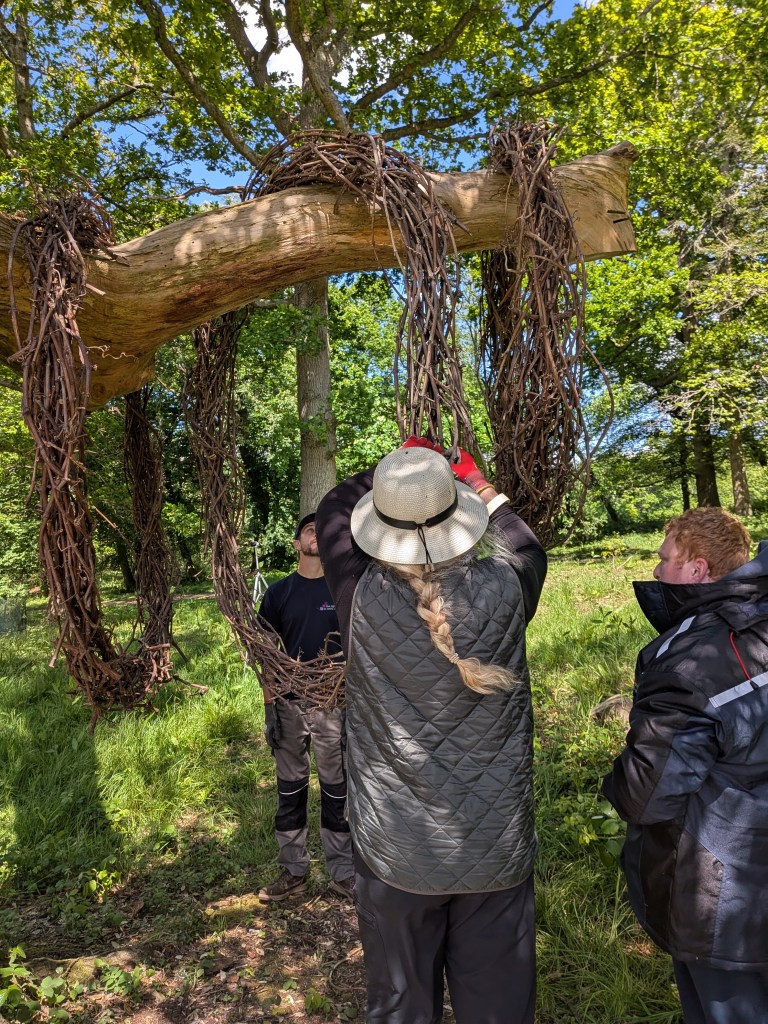
I read each site sculpturally, work with the materials it provides, activate rather than impose, choreograph the viewer’s discovery and use geometry as a living organising language.
Five Signatures of My Practice
My practice is distinguished by five recurring principles. They shape how I enter a landscape, select materials, develop form and position work in relation to its audience.
1. Sculptural Site Reading
I read a site through its existing shape, scale, structure, tension and spatial geometry. A clipped line beneath a willow, an unexpected horizontal beam or an opening between trees may become the starting point for the work.
2. Site-Derived Materiality
I begin with what a place already contains: willow, vines, stone, discarded timber, found objects or material evidence of the lives lived there. Materials are not simply chosen for appearance; they carry the history and conditions of their site.
3. Activation Rather Than Imposition
I do not treat the landscape as an empty backdrop for a sculpture made elsewhere. I work with an existing feature—revealing, extending or activating something already present so that the work appears to belong precisely where it has been placed.
4. Choreographed Discovery
My work is often positioned to be encountered rather than announced. It may sit above the expected sightline, beyond the principal path or within an overlooked threshold. Discovery becomes part of the artwork: the viewer notices it, experiences the pleasure of finding it and may then lead others towards it.
5. Geometry as a Living System
Geometry provides the organising language of my work. Rings, grids, lines, intersections, repetitions and negative spaces create visual order, but that order remains responsive to bodies, weather, movement and material variation. Geometry is not imposed as perfection; it is tested, disrupted and made alive through the systems around it.
Together, these five signatures allow me to create work that is recognisably mine: geometrically structured, materially embedded, responsive to place, quietly discovered and inseparable from the conditions in which it exists.
I work across sculpture, installation, collaborative making and moving image to make relationships visible—between people, materials, environments and the systems that shape lived experience.
1. Sculptural site-reading
I read a site as a sculptor: looking for lines, masses, voids, intersections, rhythms and structural possibilities that may otherwise be overlooked. An unusual branch, a horizontal beam, a hollow trunk or a sharply cut space beneath a tree can become the latent beginning of a composition.
This is more specific than simply making work outdoors or describing it as site-responsive. I ask what the particular site has caused me to see and do differently. Where can the work be supported? How will it move? What will sit behind it? From where will it first become visible? What physical and visual relationships already exist, and how might an intervention activate them?
The aim is not to impose an unrelated sculpture upon a location, but to reveal or intensify a composition already implicit within it. When this relationship succeeds, the completed work can appear inevitable to its setting—as though the landscape had been waiting for it.
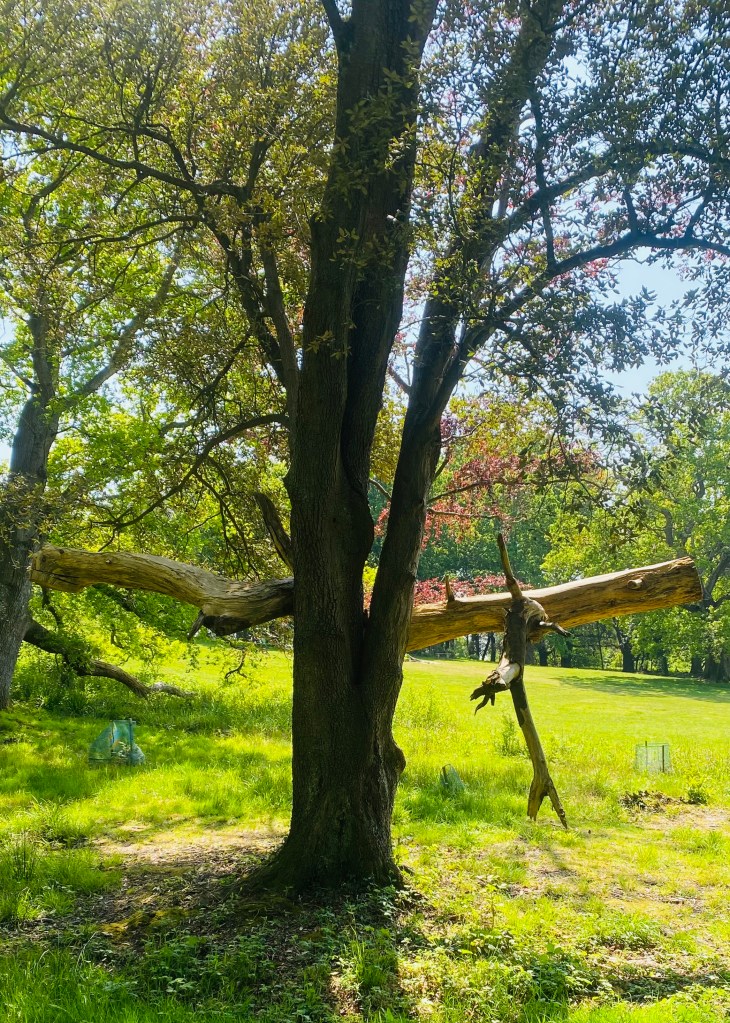
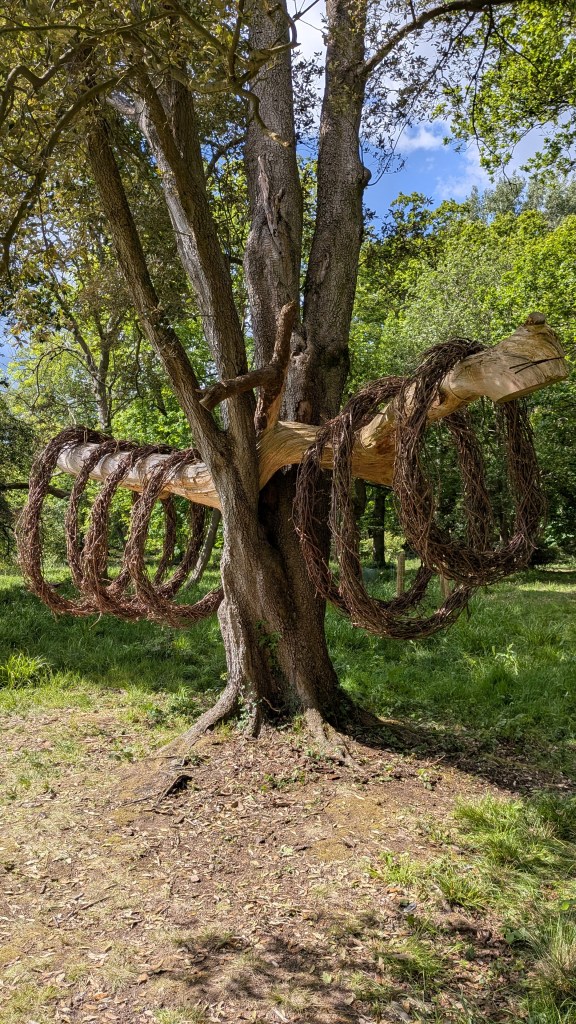
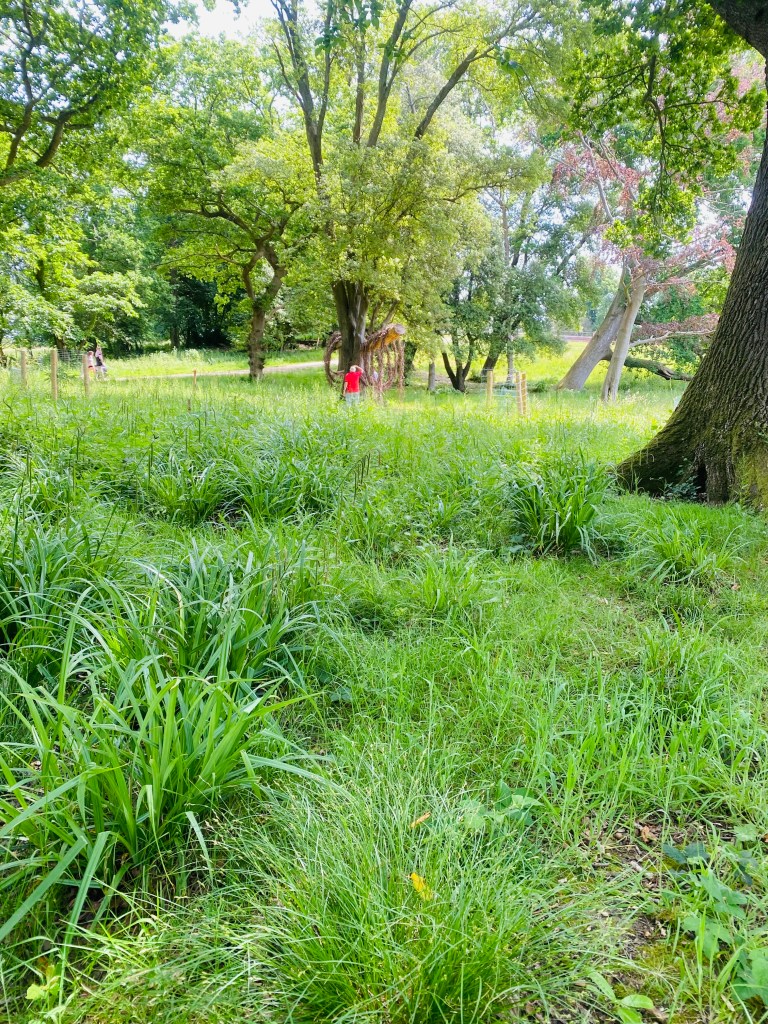
At Staunton Country Park, an existing oak beam passing through the trees became a found armature for Tracing Systems. The installation activated a relationship between human structure, organic growth, repetition, suspension and environmental change.
2. Working from what a place provides
I do not begin with a fixed material vocabulary. I work with materials found in, derived from or already circulating through a place, allowing their particular histories, limitations and behaviours to influence what can be made.
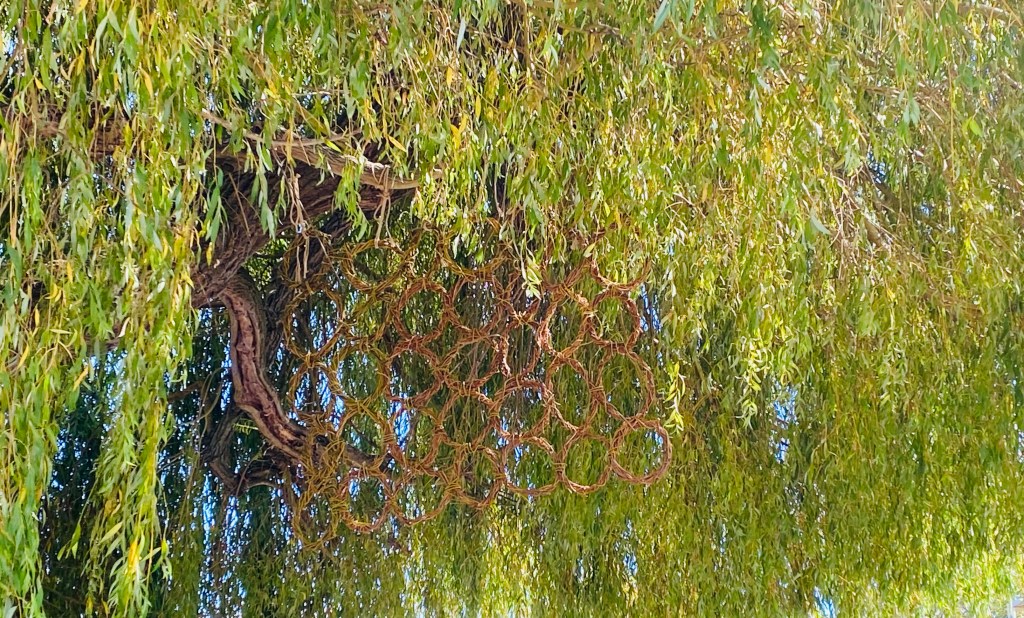
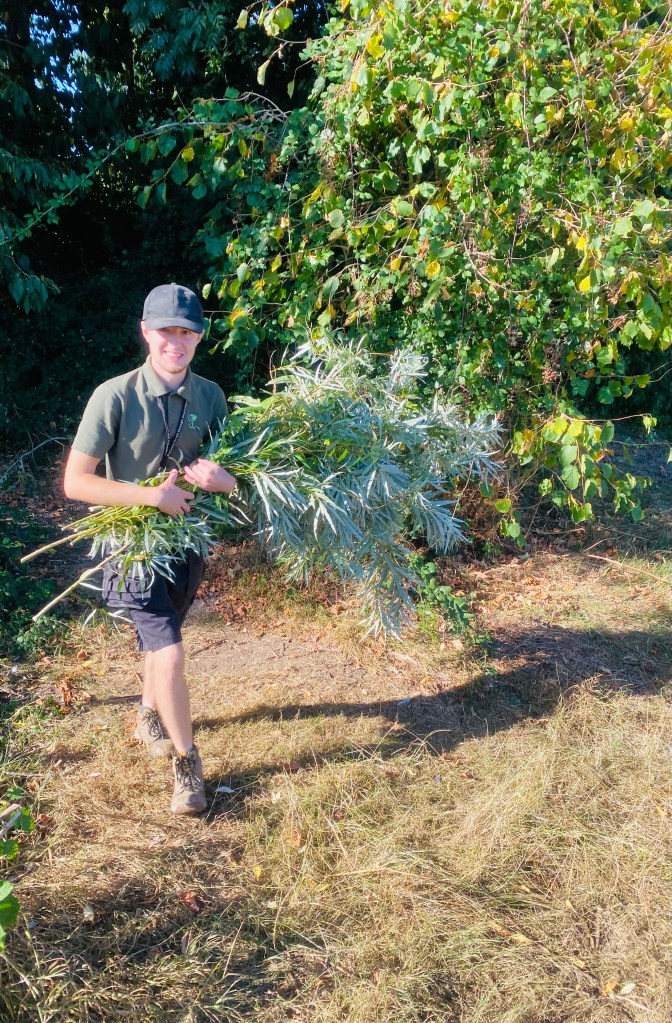
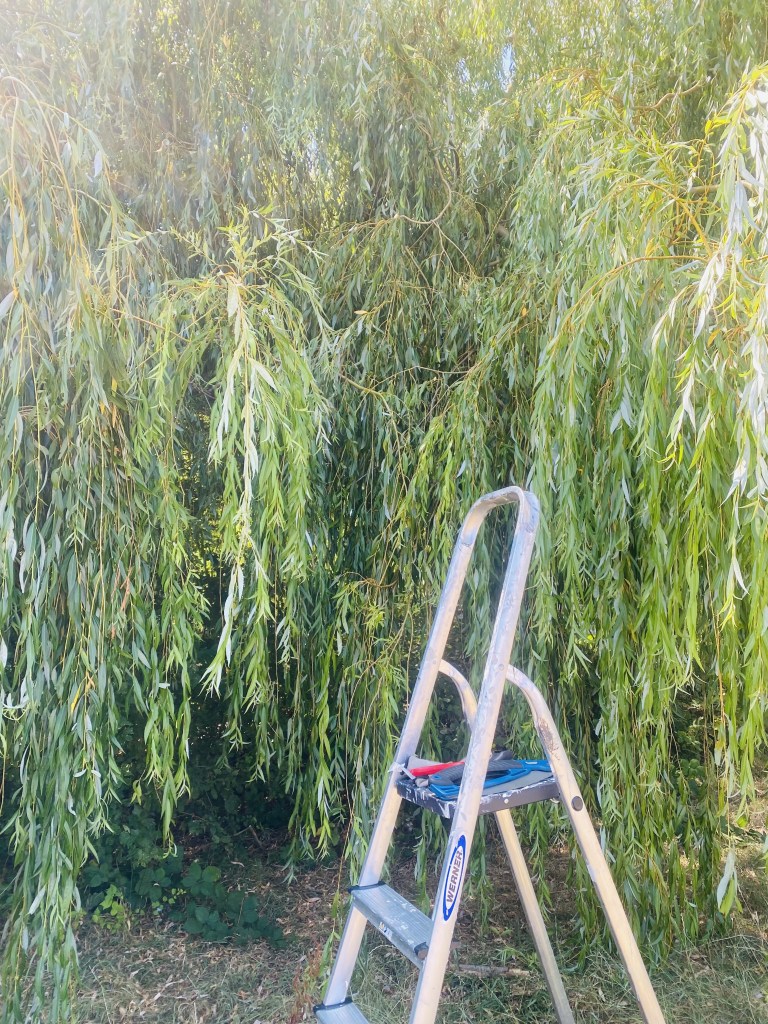
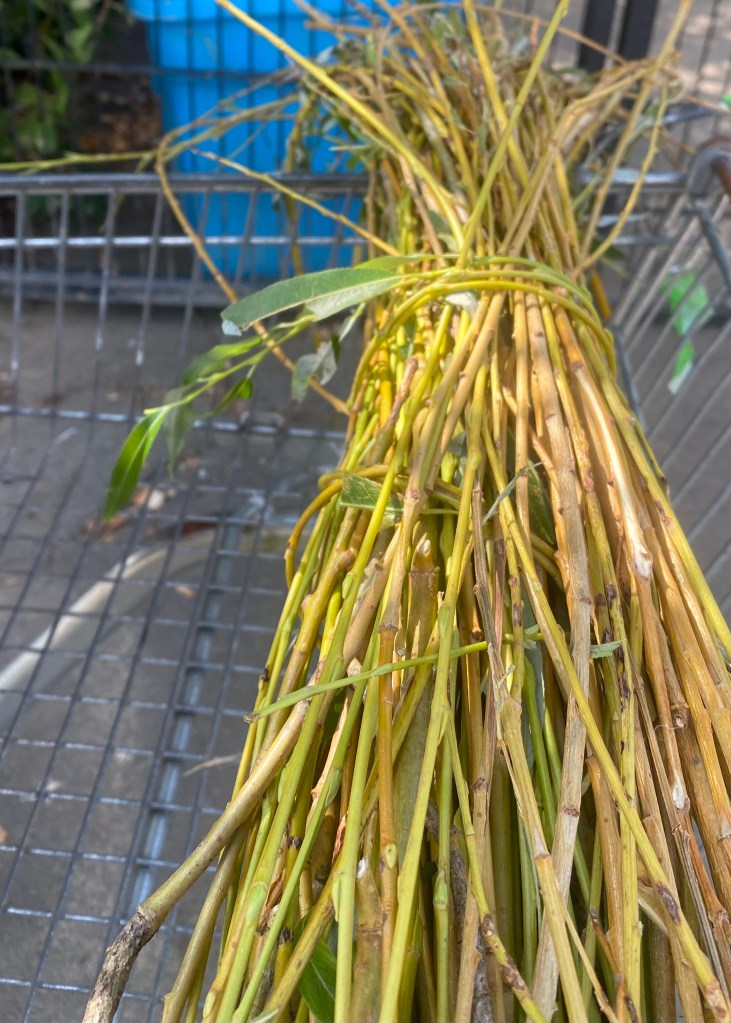
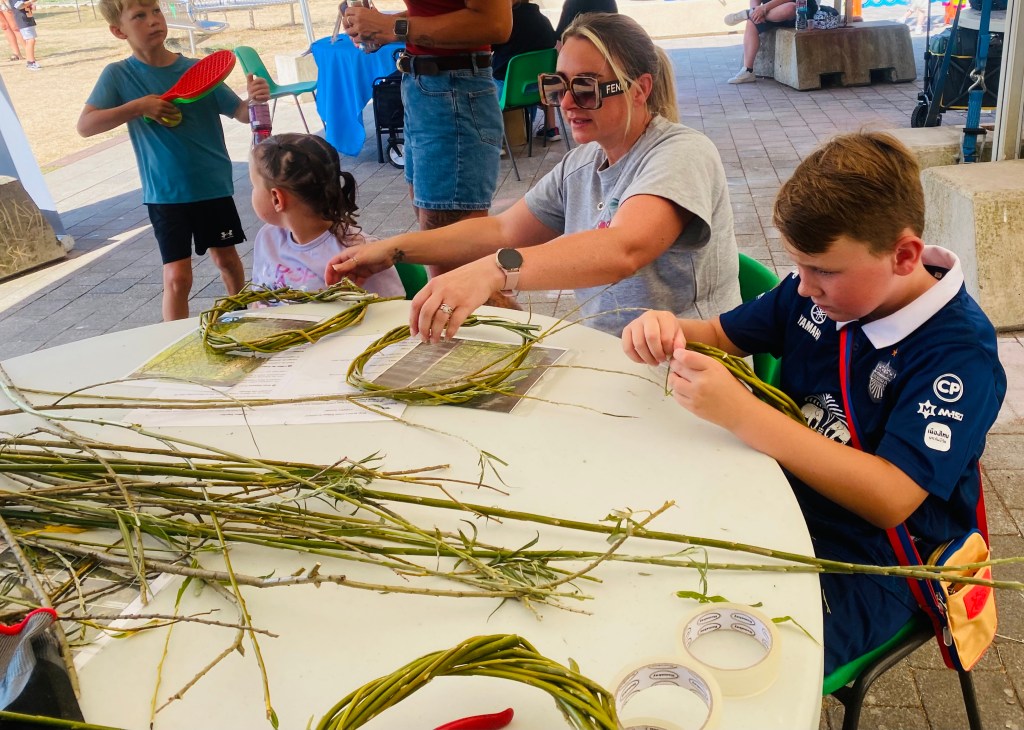
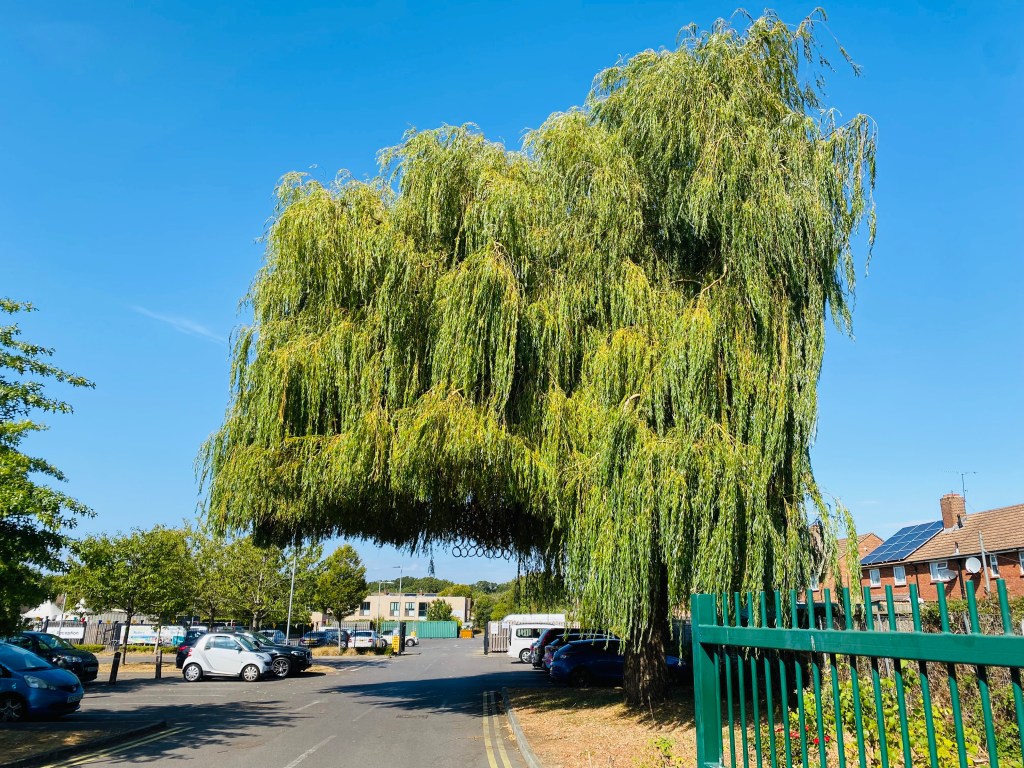
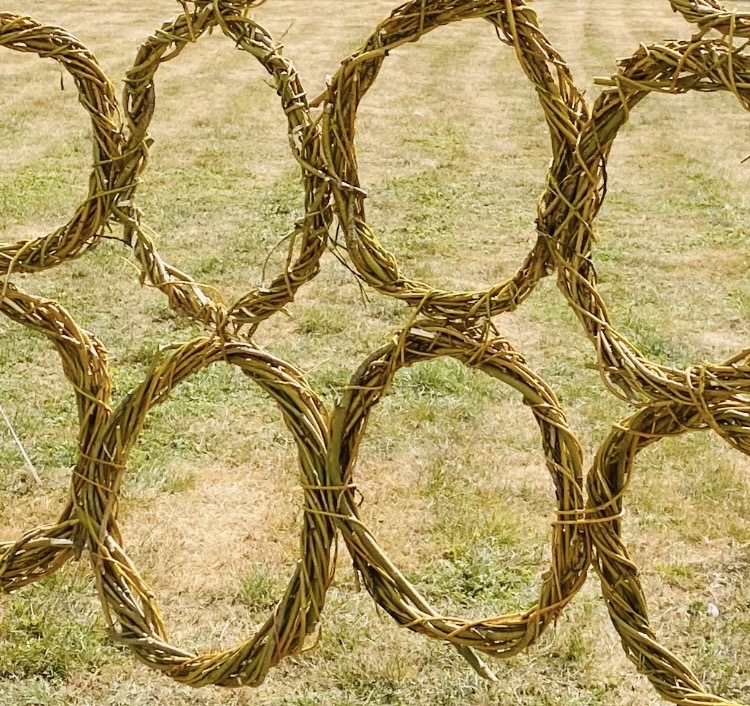
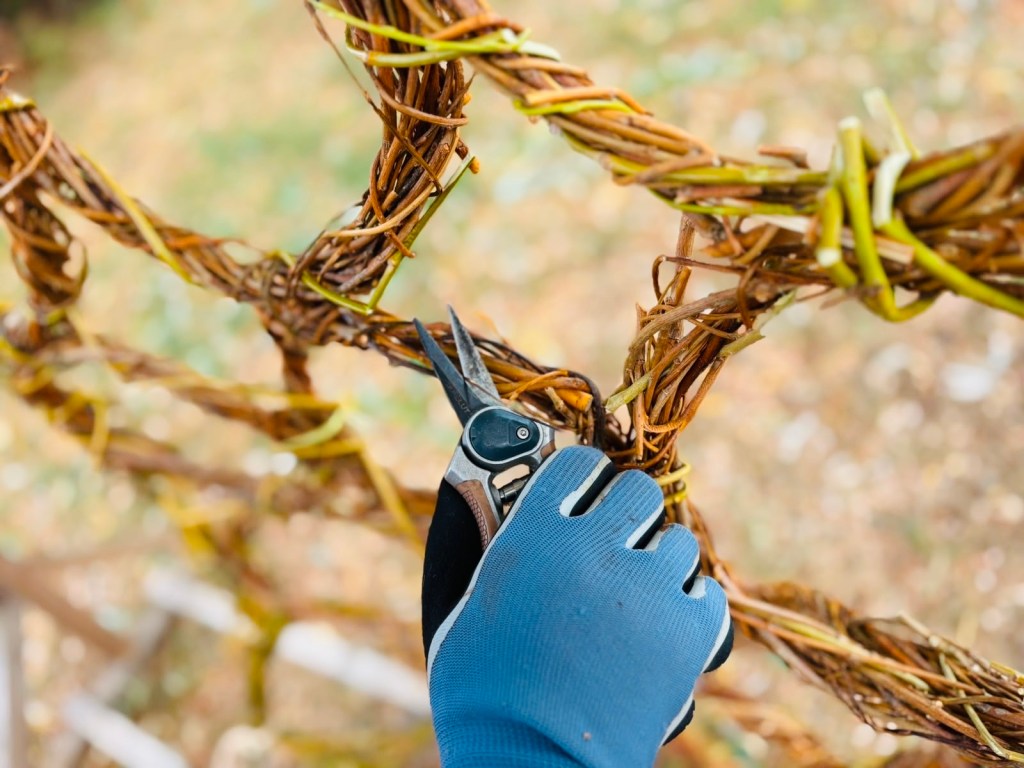
At Park Community School, willow harvested from the school grounds was woven collaboratively into individual rings and returned as a connected Ring Sheet to the original parent willow. At Staunton, the materials and structures encountered in the landscape changed the work that could be developed there. Elsewhere, discarded pallets, vines, slate, domestic textiles and accumulated medical materials have become starting points for sculpture.
Purchased materials may sometimes provide a necessary support, fastening or ground, but I do not arrive with a standardised material and reproduce a known sculptural product. The material direction emerges through the encounter.
3. Activation rather than imposition
Rather than arriving with a predetermined object and finding somewhere to place it, I allow the conditions of a site to participate in the development of the work. Existing geometries, physical forces, material histories, patterns of movement and opportunities for human encounter all influence what is made and how it is experienced.
Site responsiveness is meaningful only when the site materially changes the work. I consider its geometry, ecology, architecture, histories, communities, weather and patterns of use—not as background information, but as active conditions within the artwork.
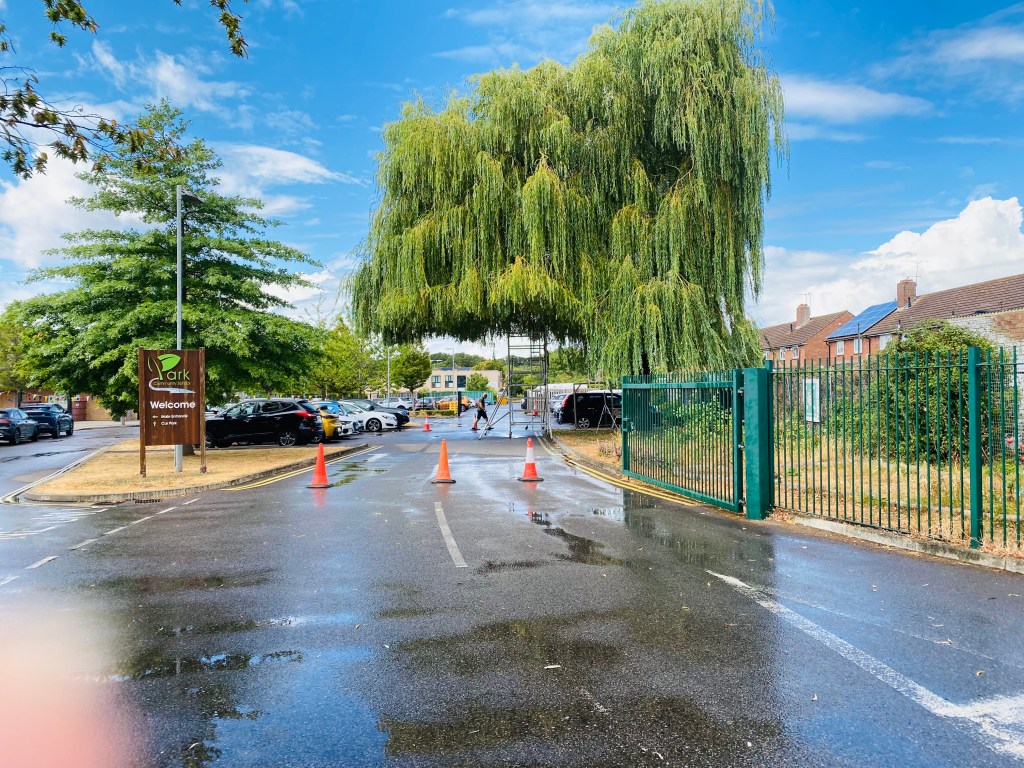
At Park Community School, the dramatically pruned underside of a mature willow created a strong geometric negative space. The Ring Sheet was positioned high within that space rather than displayed conventionally on a wall or fence. Its circular geometry intersects with the vertical structure of the tree, while wind gives the suspended sheet a movement that is connected to, but distinct from, the movement of the willow itself.
The work is made with the landscape rather than merely placed within it.
4. Choreographed discovery
I am interested not only in what an artwork is, but in how another person encounters it.
My installations can be monumental in scale while remaining deliberately non-declamatory in their placement. Rather than positioning sculpture as an immediately visible statement, I create conditions in which it can be discovered. A viewer notices an unexpected movement, looks beyond the habitual route or raises their eyes into a tree. The encounter feels partly their own.
Discovery then becomes social. The person who notices the work gains the pleasure of revealing it to somebody else: Have you seen what is in that tree? Attention and information move from person to person, extending the artwork through human interaction.
I think of this as quiet monumentality: work that is physically ambitious but does not shout over its environment. It waits within a place and rewards attention.
5. Geometry as a way of seeing
Geometry operates throughout my practice as a means of making systems perceptible. I use circles, lines, grids, repetition, intersections and negative space to reveal relationships within materials, bodies and sites.
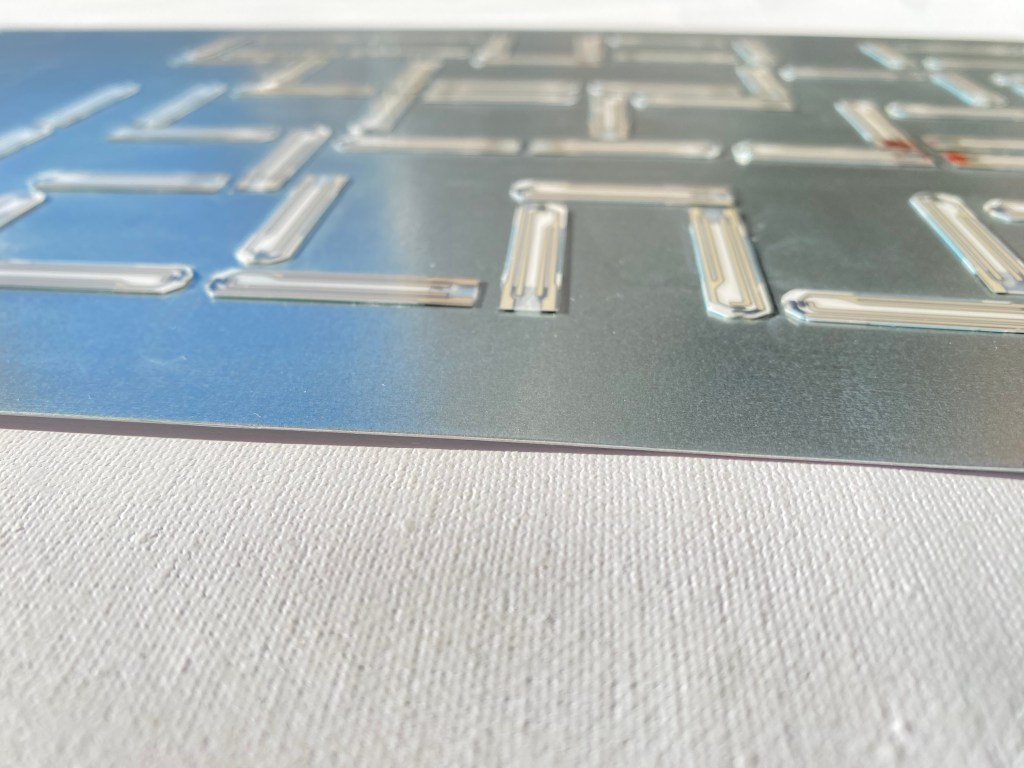
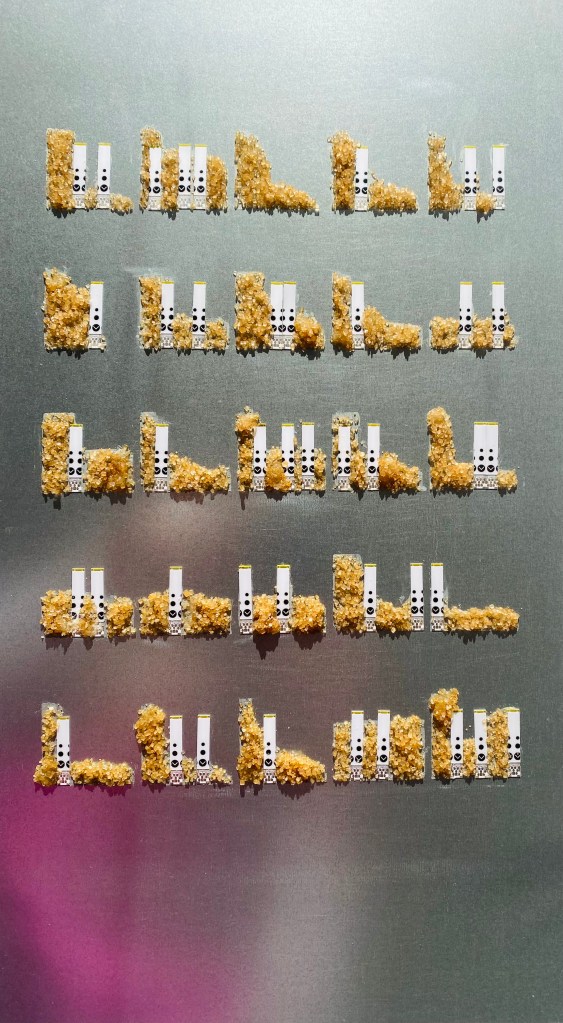
These ordered structures are placed in tension with organic matter, environmental forces and human behaviour. A repeated circular form encounters the irregular growth of willow. A strict horizontal line cuts across a branching landscape. Clinical test strips meet unstable clusters of sugar. Painted routes overlap, merge and obstruct one another as participants construct a collective system.
Geometry is therefore not decorative. It provides a visual language through which structure, interdependence, pressure, adaptation and emergence can be experienced.
A systems-led practice
Across changing materials and locations, a consistent question runs through my work: how can sculpture and embodied participation help people perceive the systems they inhabit?
I make hidden structures tangible through geometry, material behaviour, spatial relationships and collective action. The resulting works do not attempt to simplify complexity into a single explanation. They create situations in which relationships can be seen, felt, negotiated and transformed.
I identify an undervalued existing structure, perceive the stronger configuration latent within it, and mobilise materials, people and practical ingenuity until that configuration becomes visible.