Phase 1 – Preparing the System
This page records one stage of the Complex Systems pilot at Park Community School. The pilot tests a four-phase process that informs the planned main programme.
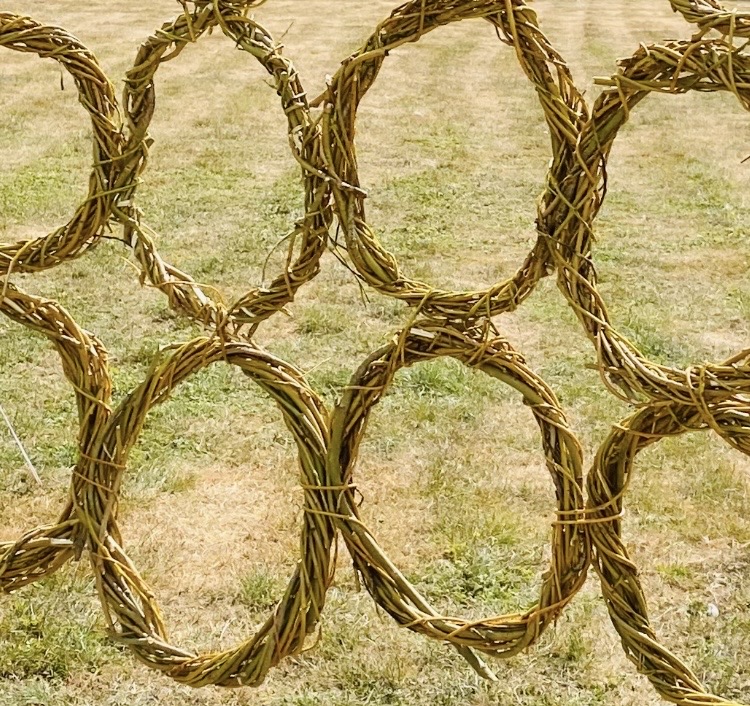
Community engagement began the pilot. Contributors made individual rings, establishing the shared material and relationships that the next phase would bring together. The planned shared harvesting activity did not take place.
This preparation created the elements for a collaborative sculpture. The pilot explored how a community could gather, make and contribute to a developing form.
Developed in partnership with Park Community School, Complex Systems used willow harvested directly from the school grounds, transforming locally grown natural materials into a site-specific public artwork. Every stage of the process drew upon the landscape itself, allowing the sculpture to emerge from materials that already belong to the place in which it would eventually stand.
The pilot began during the Connect4Families school holiday activities at Park Community School, where members of the local community were invited to learn a simple willow-weaving technique and contribute their own woven ring. Individually, each ring was modest; collectively, they became the foundation of a much larger sculptural system. Contributors helped construct the material from which the artwork grew.
Phase 1 – Preparing the System
Willow was harvested, sorted and prepared before contributors were introduced to the weaving process. Horticulture students and staff at Park Community School helped harvest and prepare the willow.
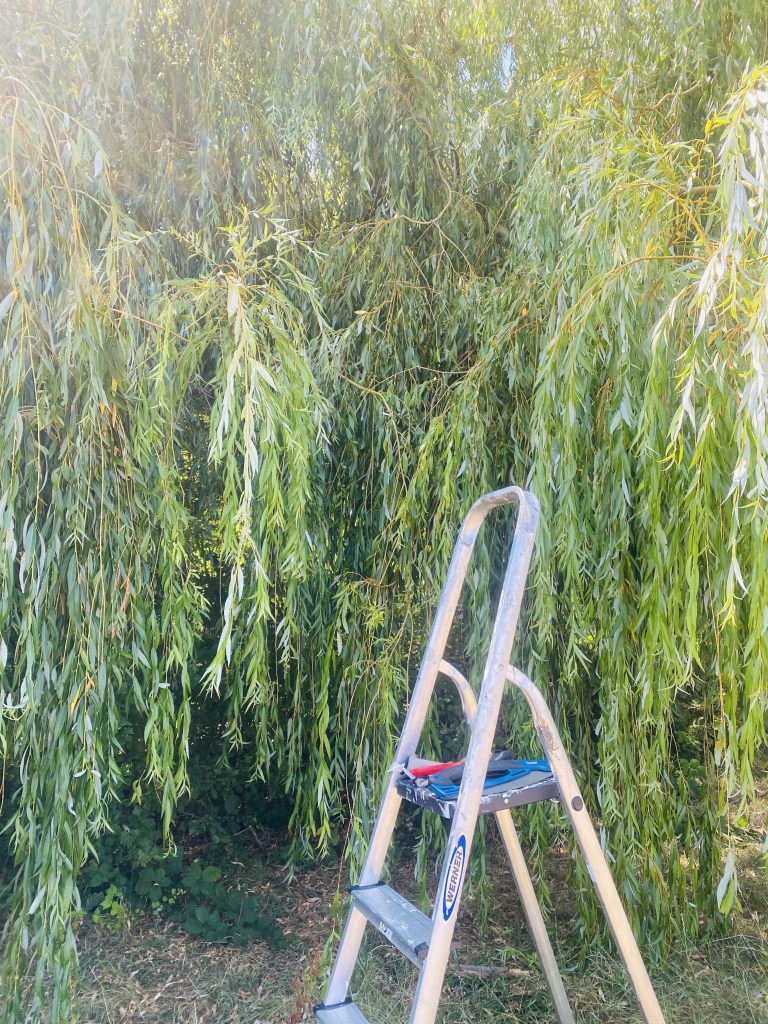
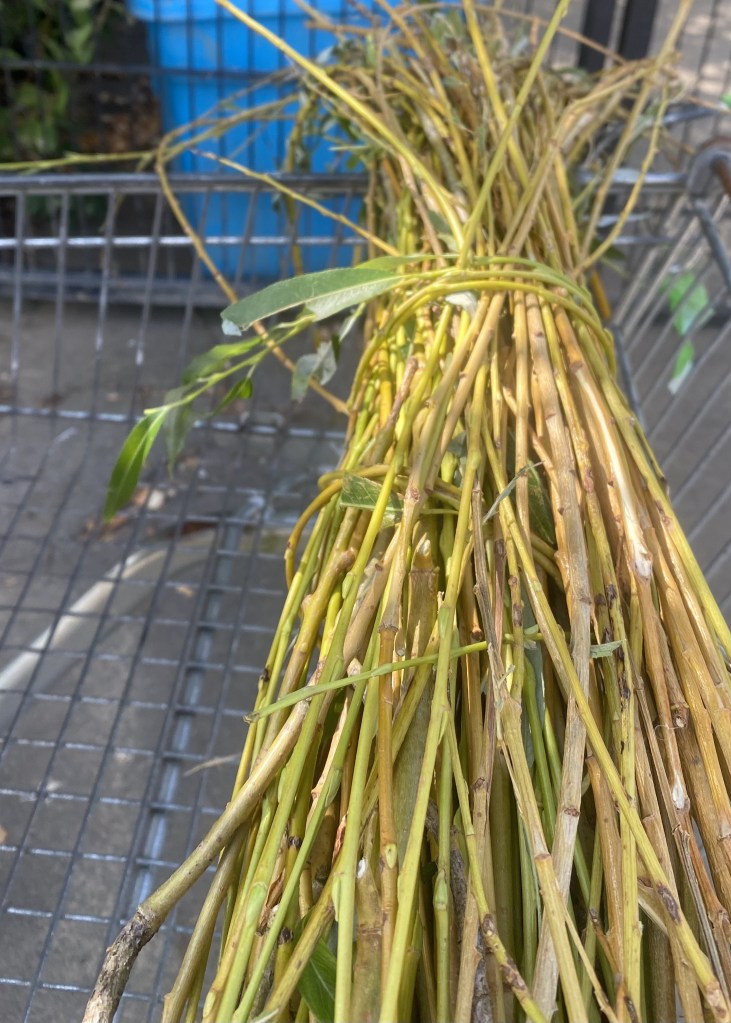
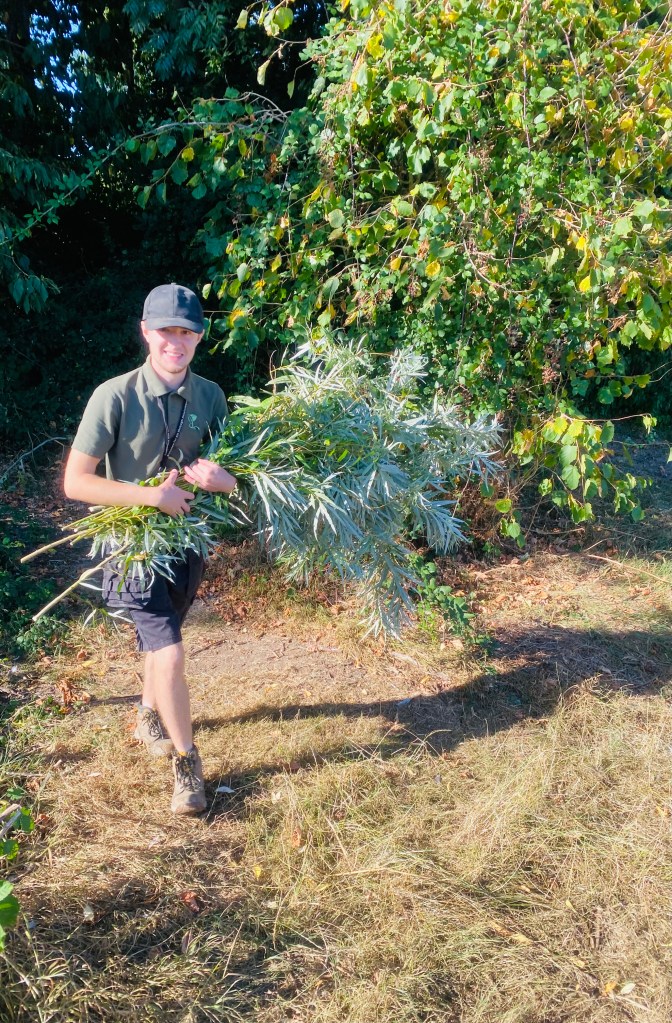
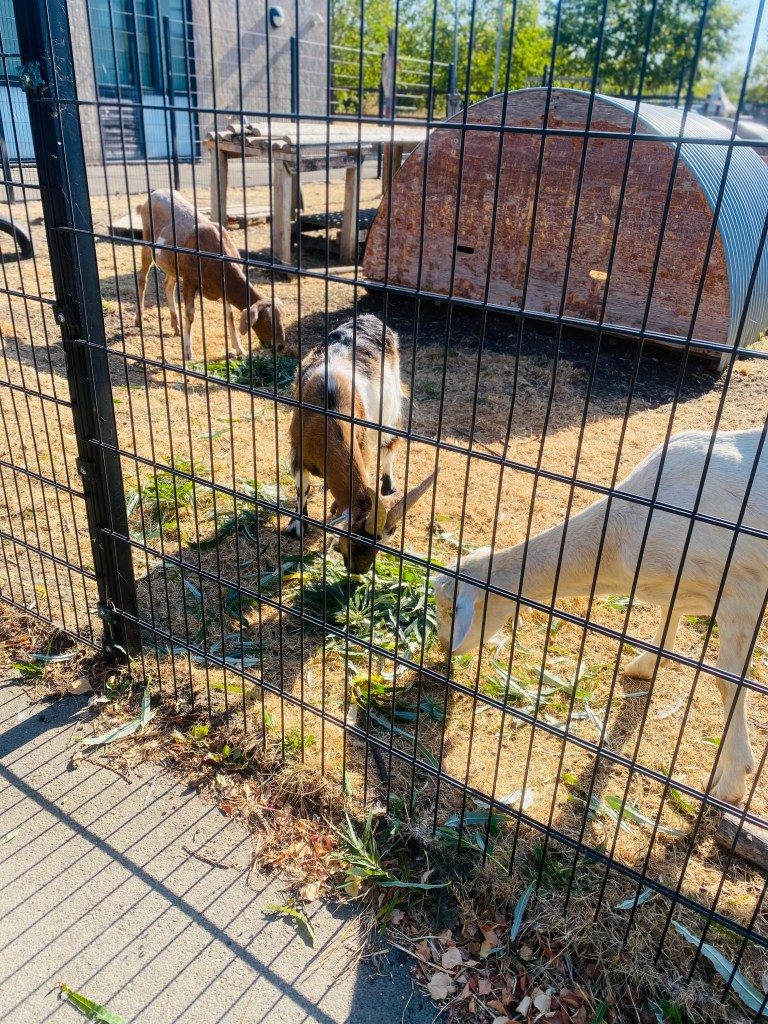
The resident goats helped to eat the leaves stripped from the harvested willow.
Members of Park Community School made individual willow rings using simple armatures. The completed pilot ring sheet contained 35 rings. This was sufficient to test assembly, installation and observation, but insufficient for manipulation into other sculptural forms. The full programme will require a ring sheet of at least 150 rings.


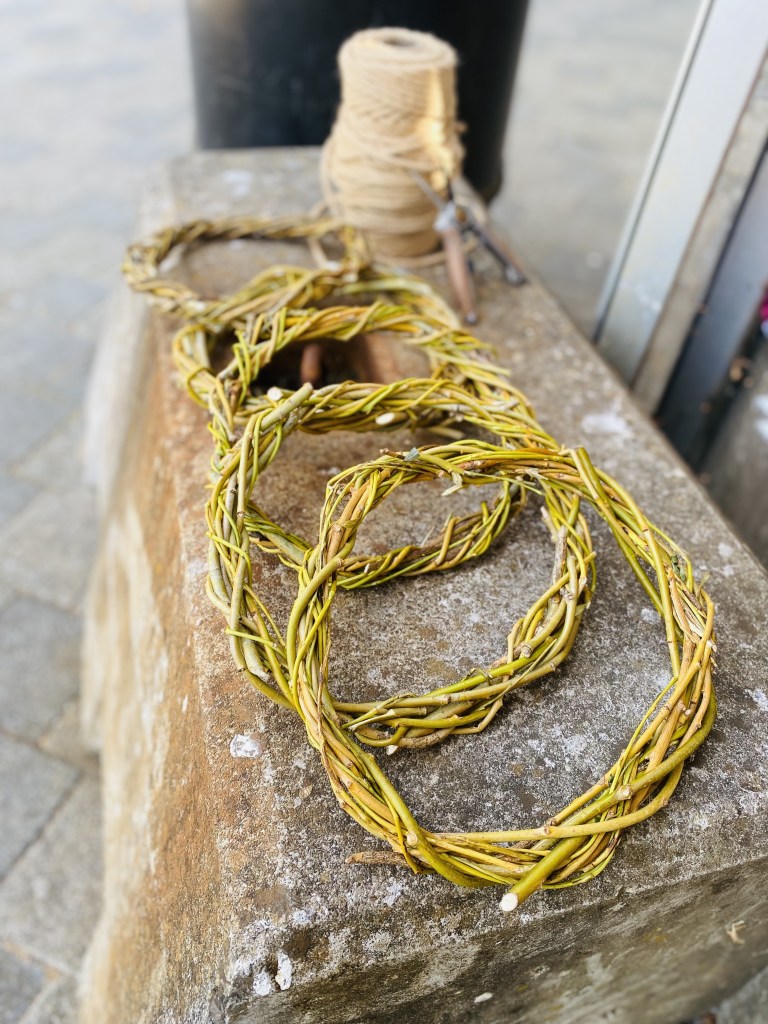
Community Participation
The first stage of Complex Systems took place during the Park Community School Connect4Families school holiday activities, held throughout the summer holidays. Families, children, teenagers and local residents were invited to join the project for as little or as long as they wished. Some contributors stayed only a few minutes, while others spent several hours contributing to the work.
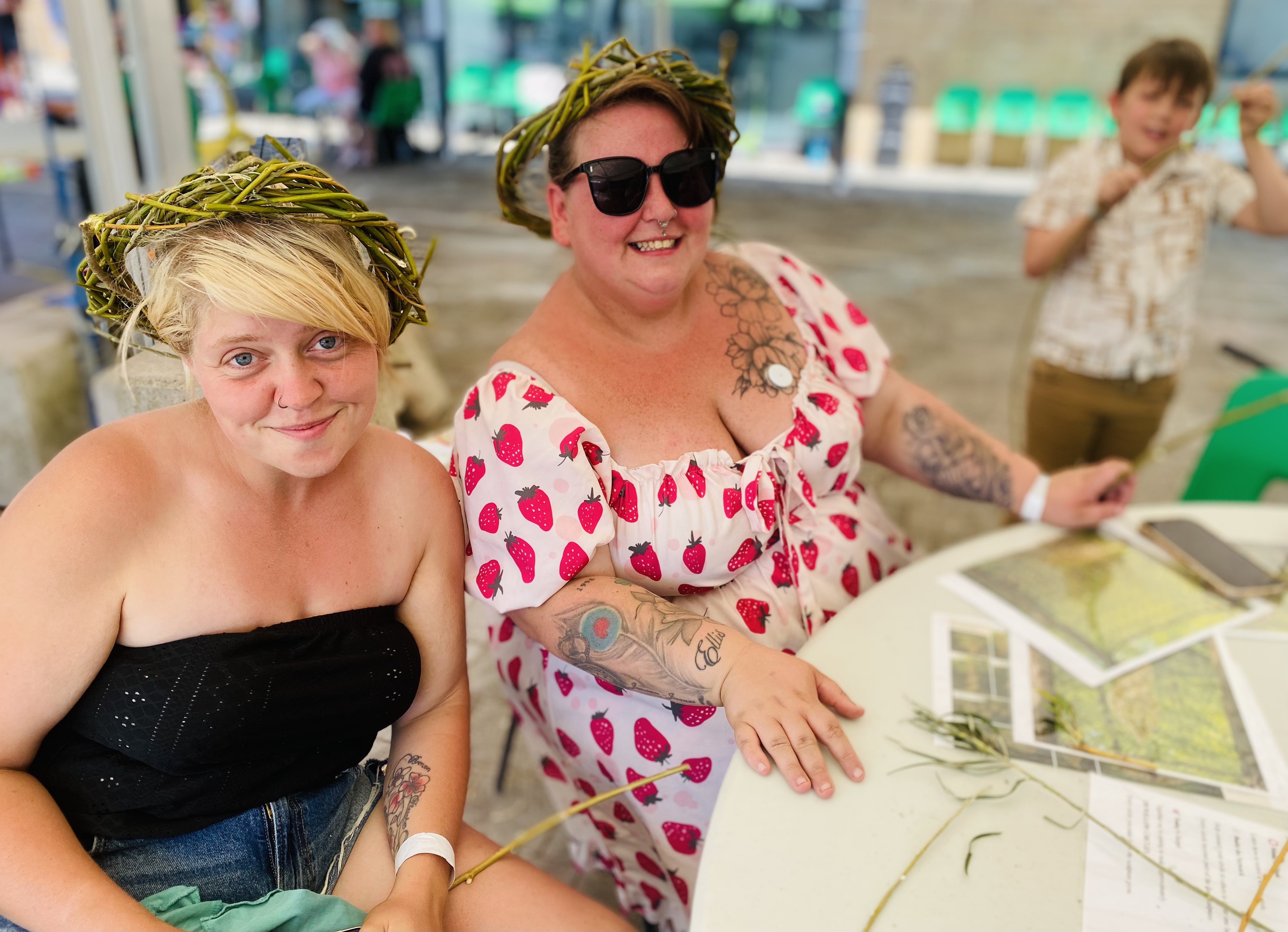
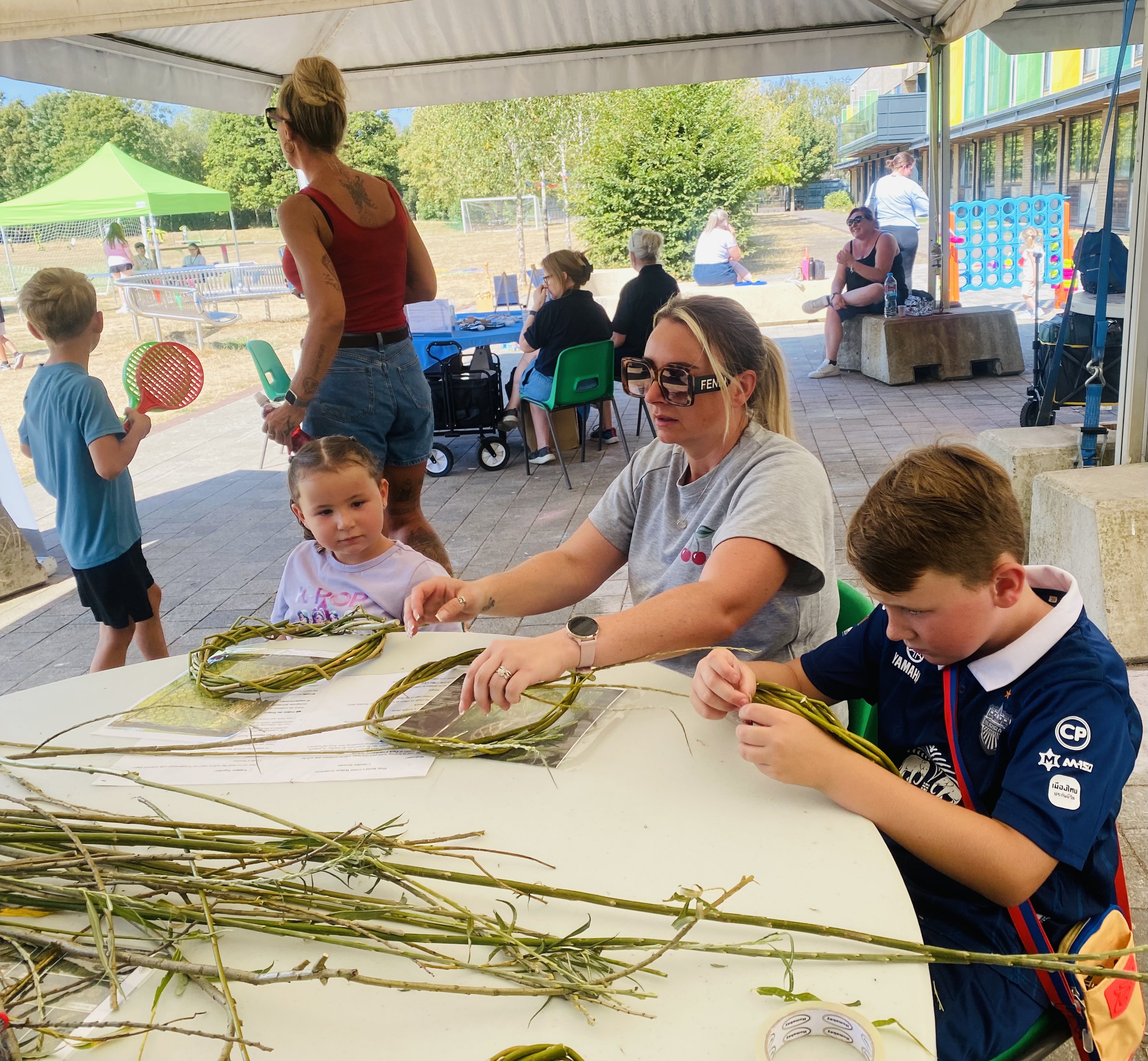
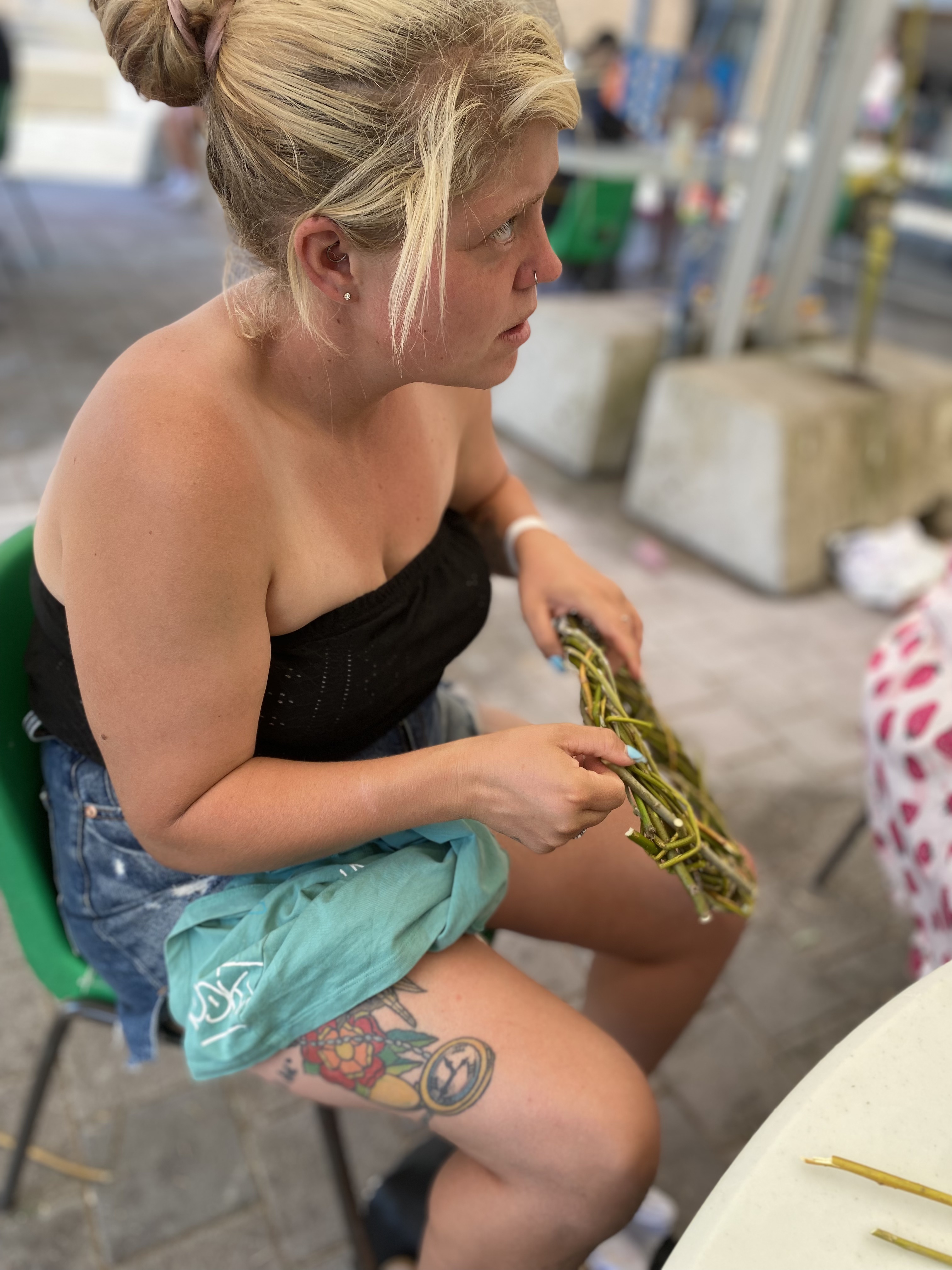
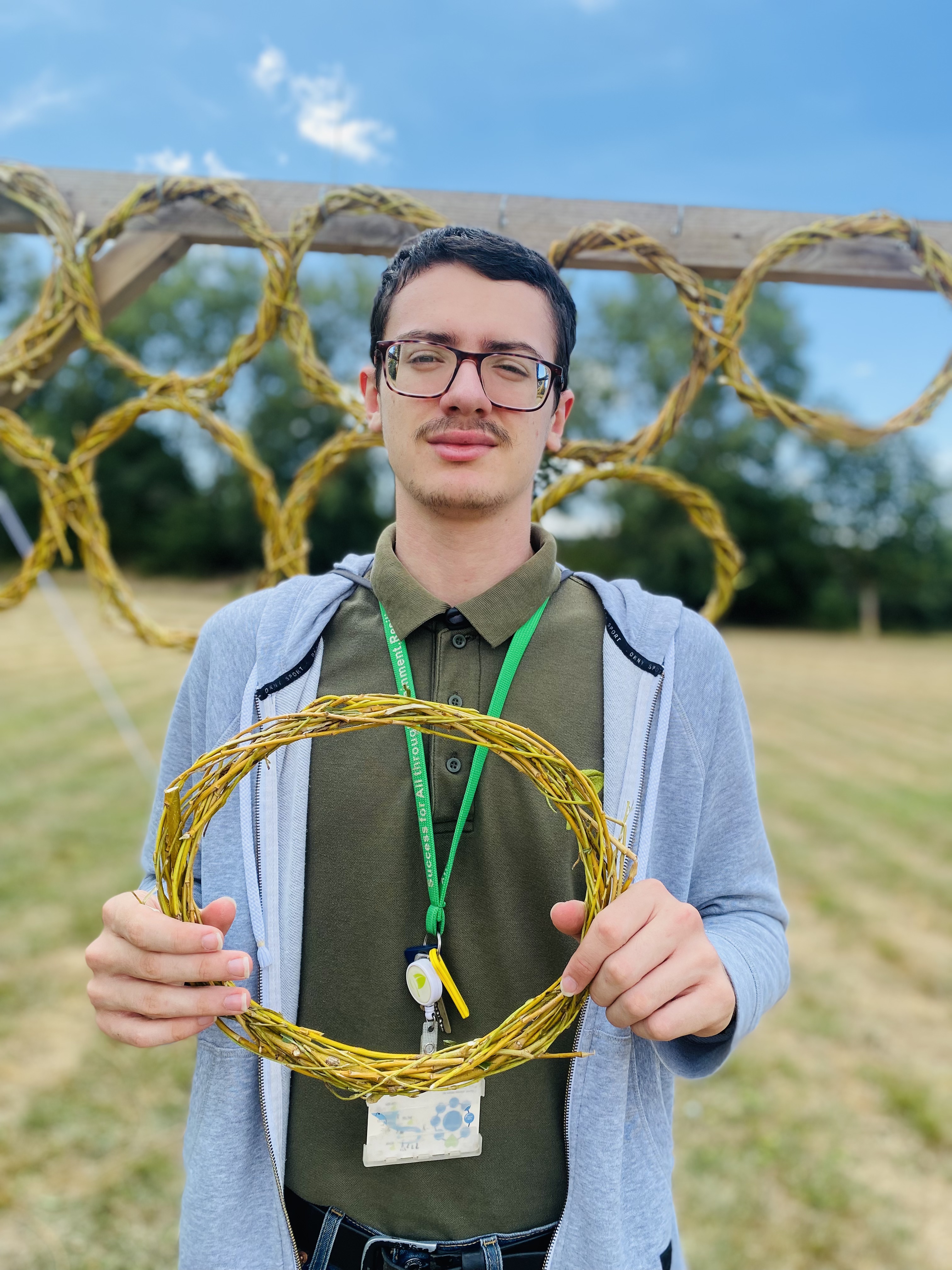
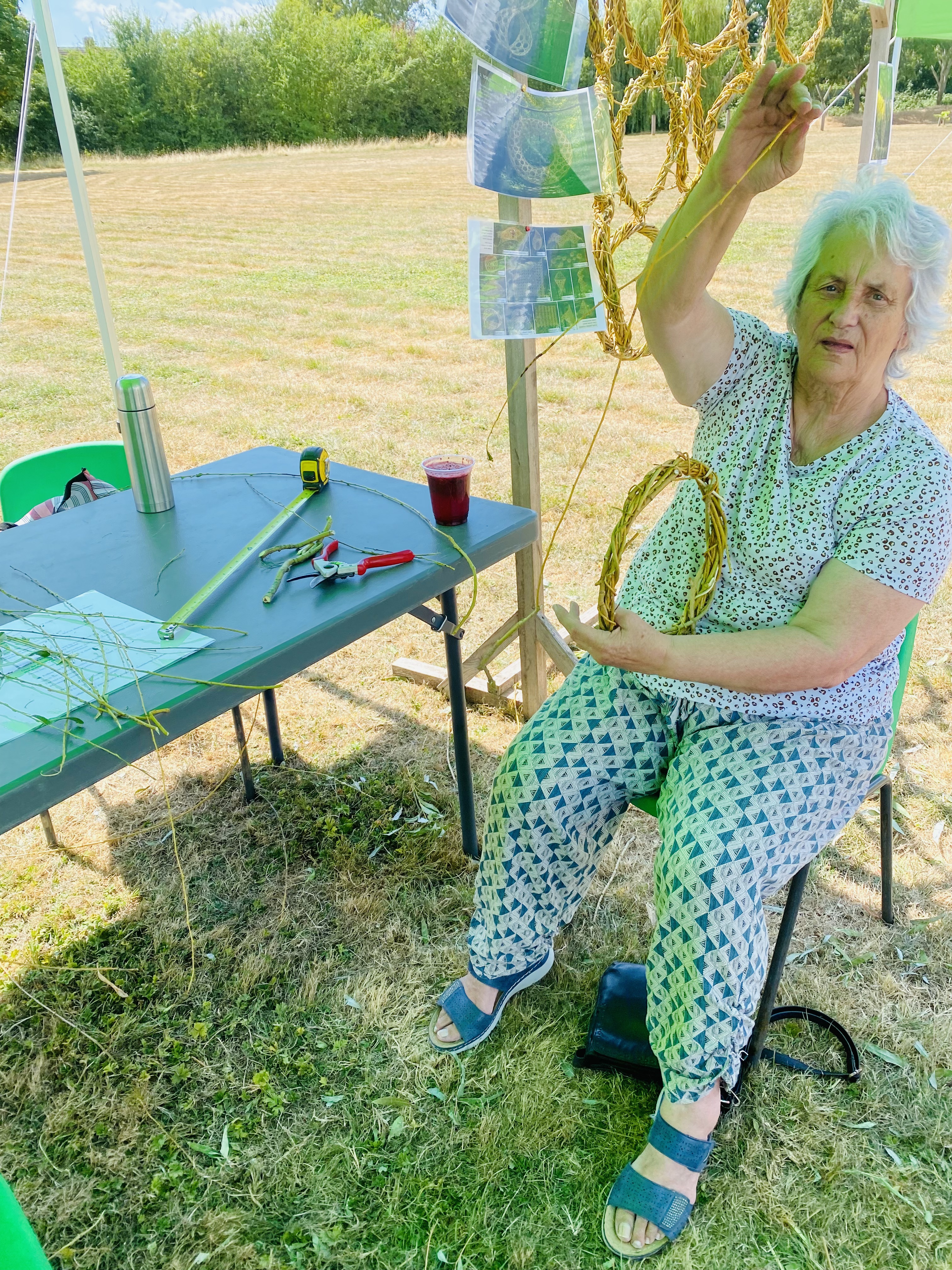
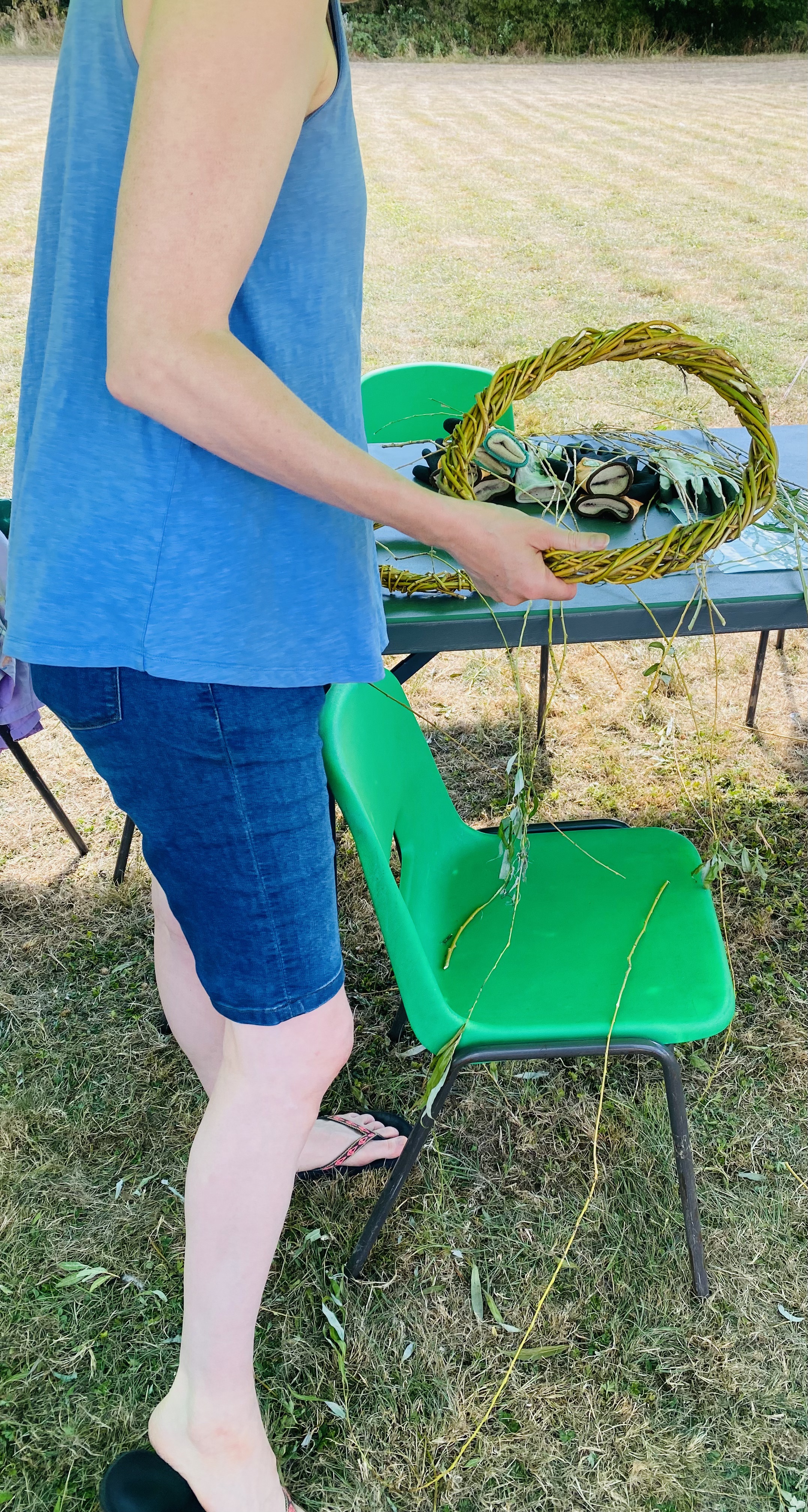
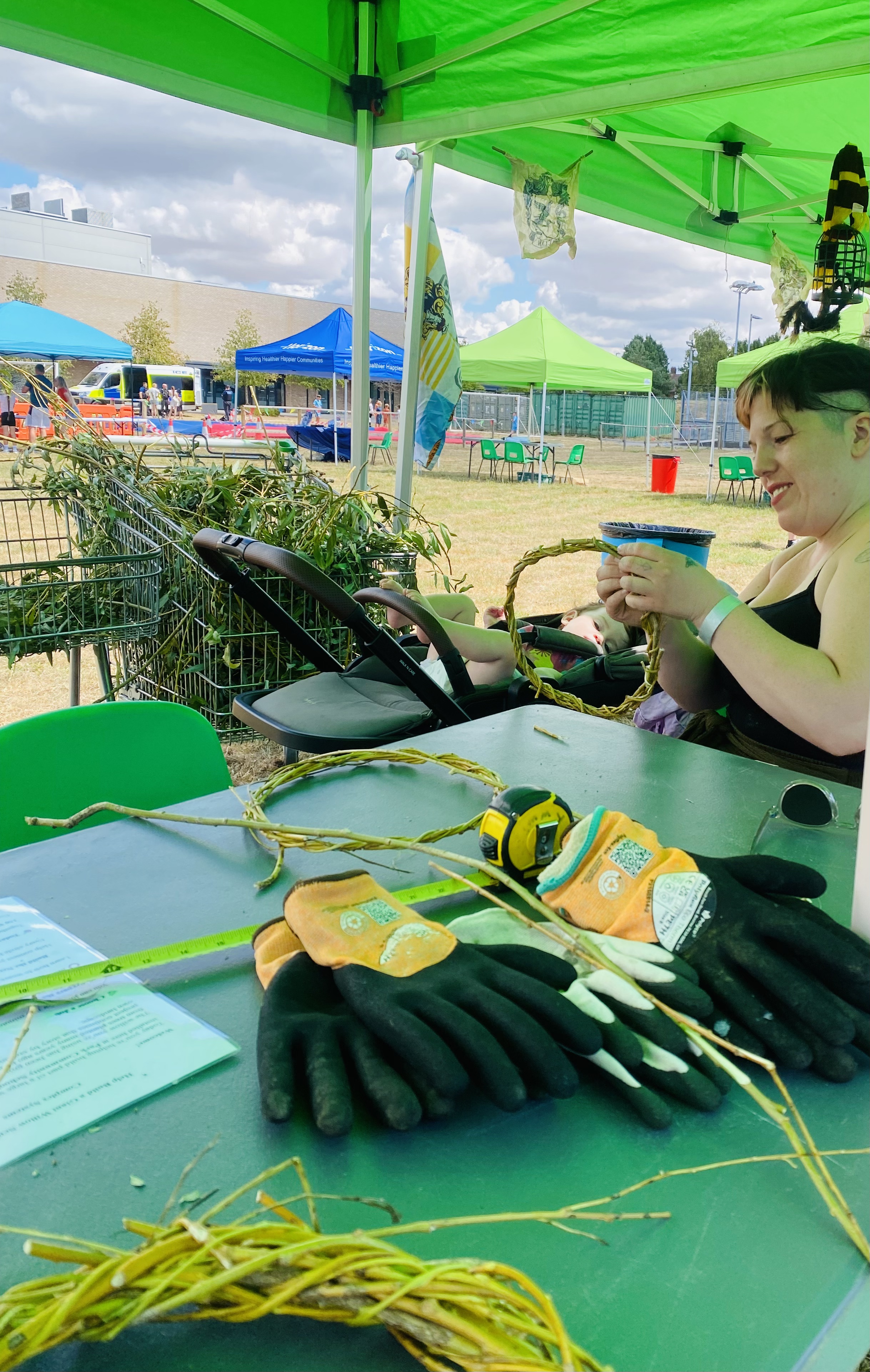
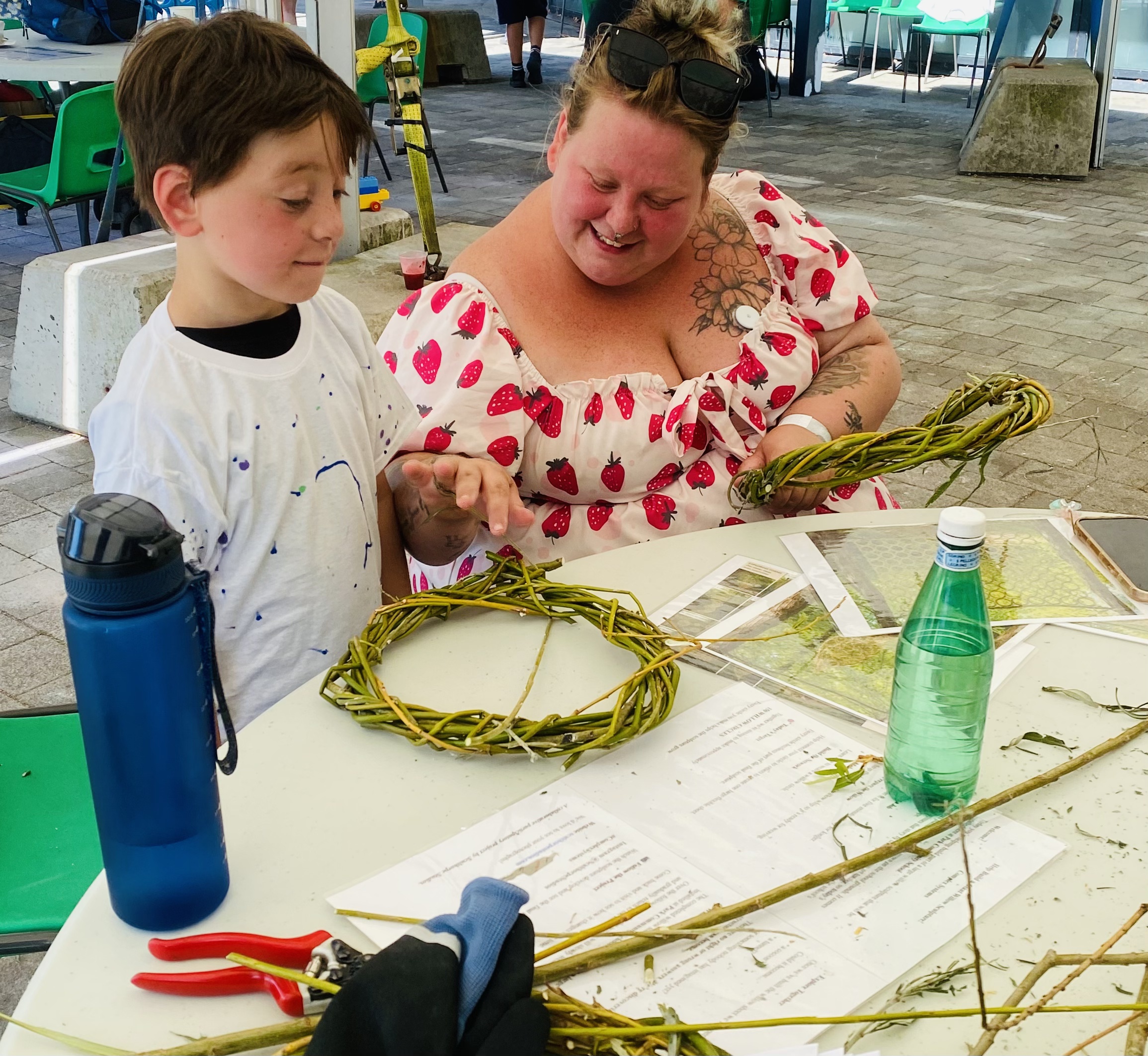
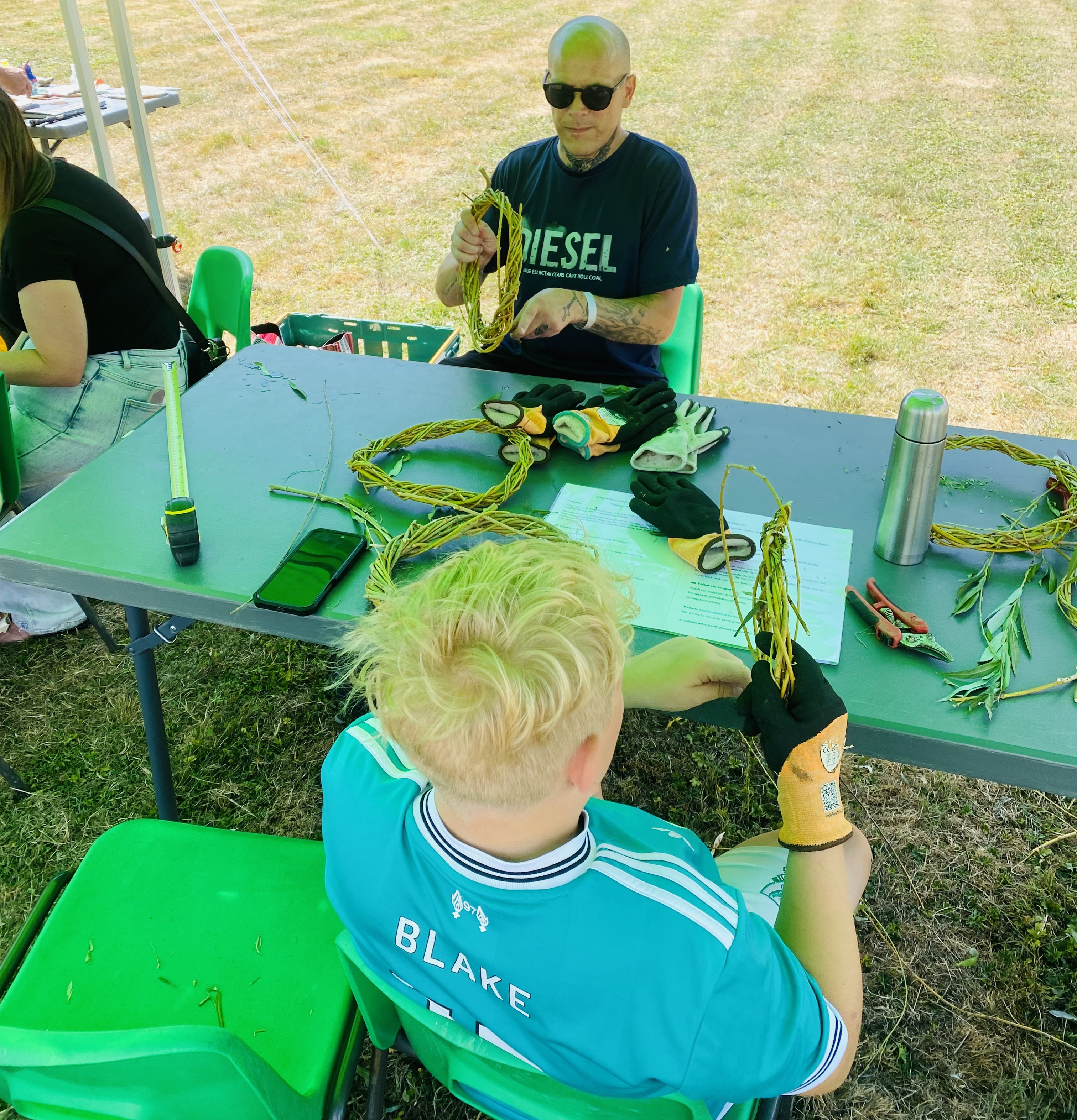
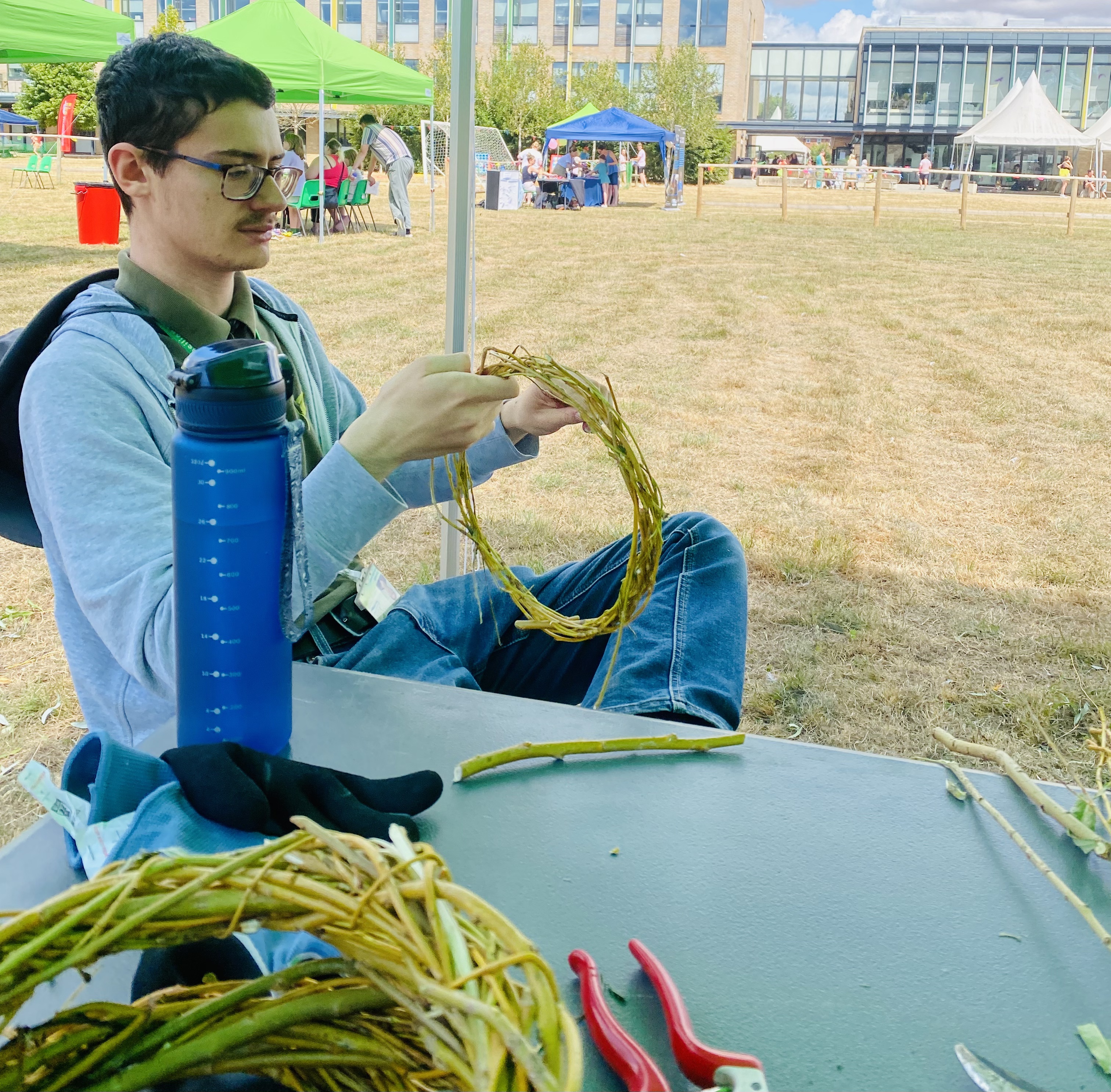
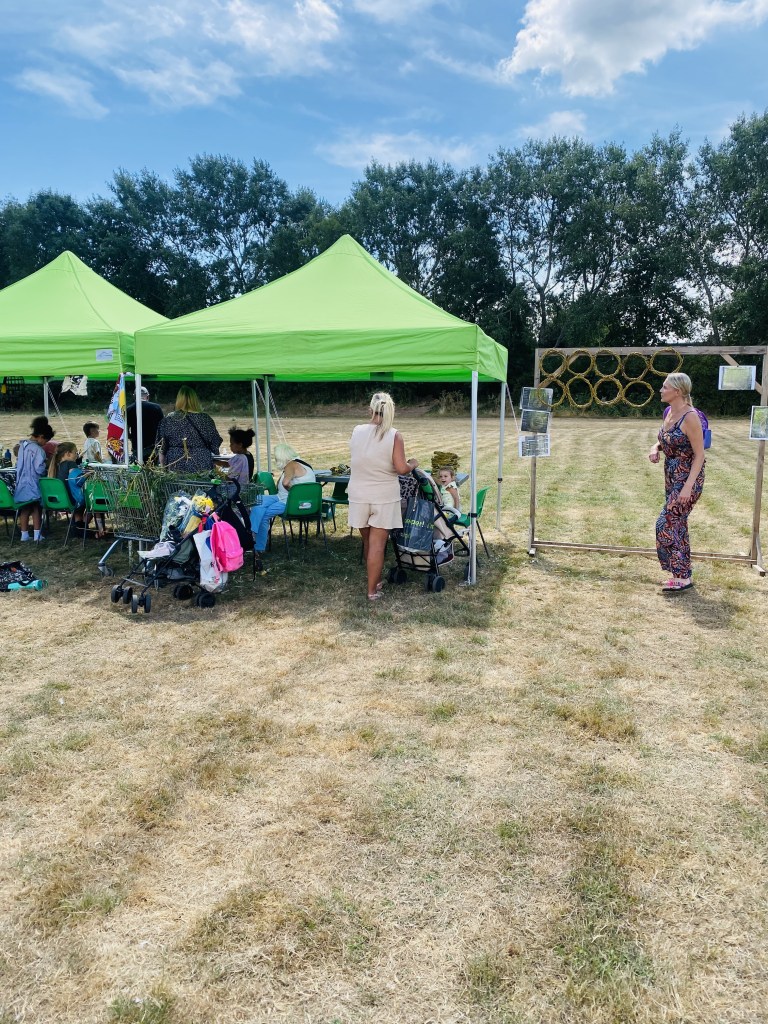
No previous experience of willow weaving was expected. Contributors were introduced to the project through a series of accessible activities, allowing everyone to contribute according to their interests and confidence. The activities offered were:
- prepare and sort the harvested willow
- select suitable willow for weaving
- learn to weave individual rings using prepared armatures
- help connect completed rings into the growing Ring Sheet.


Each contributor brought different skills, interests and levels of experience, making every contribution unique. Some completed an entire woven ring, others created part of one, while some helped prepare materials or observed the process. Rather than prescribing individual outcomes, the project created the conditions for collaboration to emerge naturally.
This open-ended approach reflects the central idea behind Complex Systems: a complex whole does not depend upon identical contributions, but emerges through the accumulation of many different individual actions and interactions.
Embracing Uncertainty
The project deliberately left many of its most important variables unknown. Who would join? How many people would arrive? What ages, experiences and interests would they bring? Would they stay for five minutes or four hours? Would they prepare materials, weave a single ring or help build the pilot ring sheet? These questions remained unanswered until the project unfolded. Rather than treating this uncertainty as a problem to be managed, Complex Systems treated it as part of the artwork itself. The sculpture developed through countless individual choices and interactions, allowing its form and meaning to emerge from participation rather than prescription.

Complex Systems has been developed in collaboration with Park Community School and Connect4Families and is supported through the Connect for Communities programme, Best Start in Life, Hampshire County Council and the Department for Education. Their support has enabled local families, students and artists to work together in creating a shared public artwork that grows directly from the landscape and community in which it belongs.
Learning from the Pilot
Contributors particularly enjoyed weaving and making rings. Preparing willow needed additional staff help, while some makers wanted to take their rings home. These responses highlighted the need to explain how each ring contributes to the shared artwork and to distinguish collective making from making something to keep.
In Phase 1 of the full programme, harvesting and preparing the willow will be organised as one connected activity before seated weaving begins. Options include making the shared contribution clear when people join, explaining the purpose of the larger ring sheet and providing a separate table for those who want to make a ring to take home.
Continue to see how the individual rings were brought together in Pilot Phase 2 – Building the Ring Sheet.

