Tracing Systems – After the System Phase 4
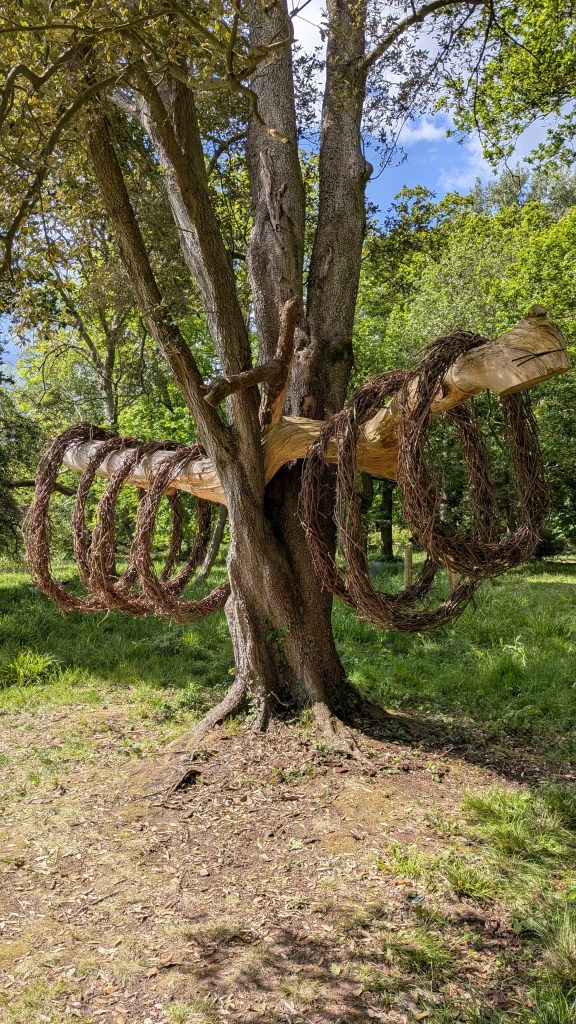
A solo-authored site specific public sculpture developed at Staunton Country Park as part of the wider Tracing Systems project in May 2026.
Phase Four activated the sculptural system by bringing seven independently constructed torus forms into sustained relationship within a shared public environment. While each torus embodied a separate organisational experience, their installation created a new system in which relationships between components became as significant as the components themselves. Wind, gravity, weather, vegetation, wildlife, visitors and time became active agents within the work, transforming the sculpture from a static representation into an adaptive socio-ecological system.
The final installation developed from earlier tests for a vertical suspended structure. As the site conditions changed, the work was reconfigured into its installed form, retaining the core sculptural language of torus, rope, tree, suspension and measured relation.
“I see musical notes hanging on a staff – like a bar of music”
Artificial intelligence, 14 May 2026
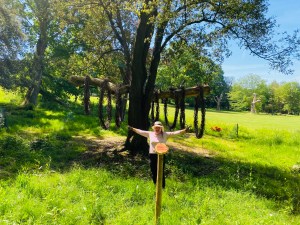
View the first ideas about Tracing Systems — the Vertical Installation Study
Site
The Environment as System
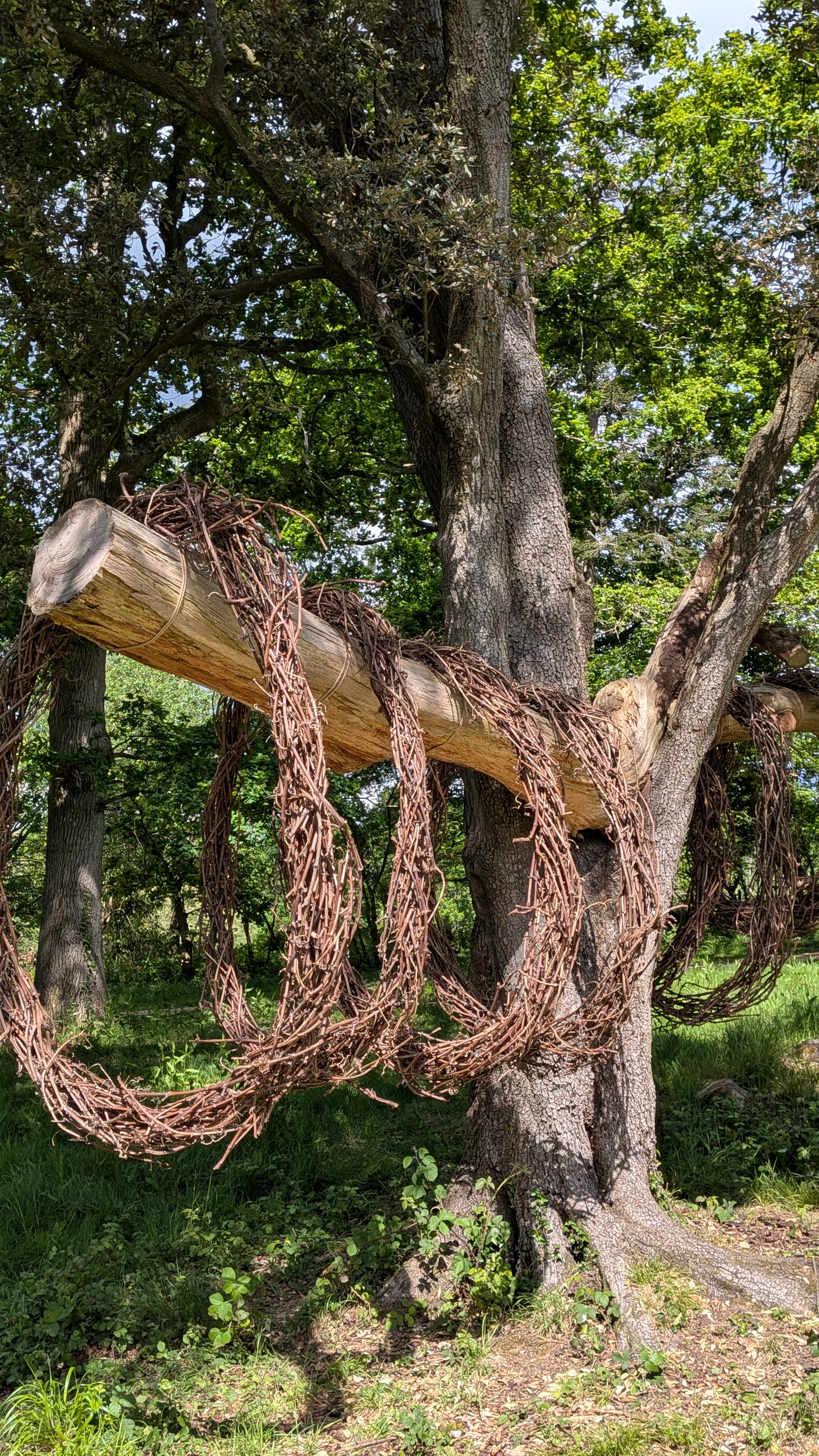
The sculpture is installed within the public landscape of Staunton Country Park. Rather than treating the site as a neutral location, Tracing Systems understands the landscape as an active component of the work. The mature trees, suspended oak beam, weather, gravity, changing seasons, wildlife and public movement all contribute to the behaviour of the installation.
The sculpture therefore exists within a larger socio-ecological system rather than as an isolated object. Environmental conditions continually influence movement, tension, visibility, deterioration and public experience. The installation was designed not to resist these processes but to become responsive to them, allowing the work to continue evolving throughout its six-month life.
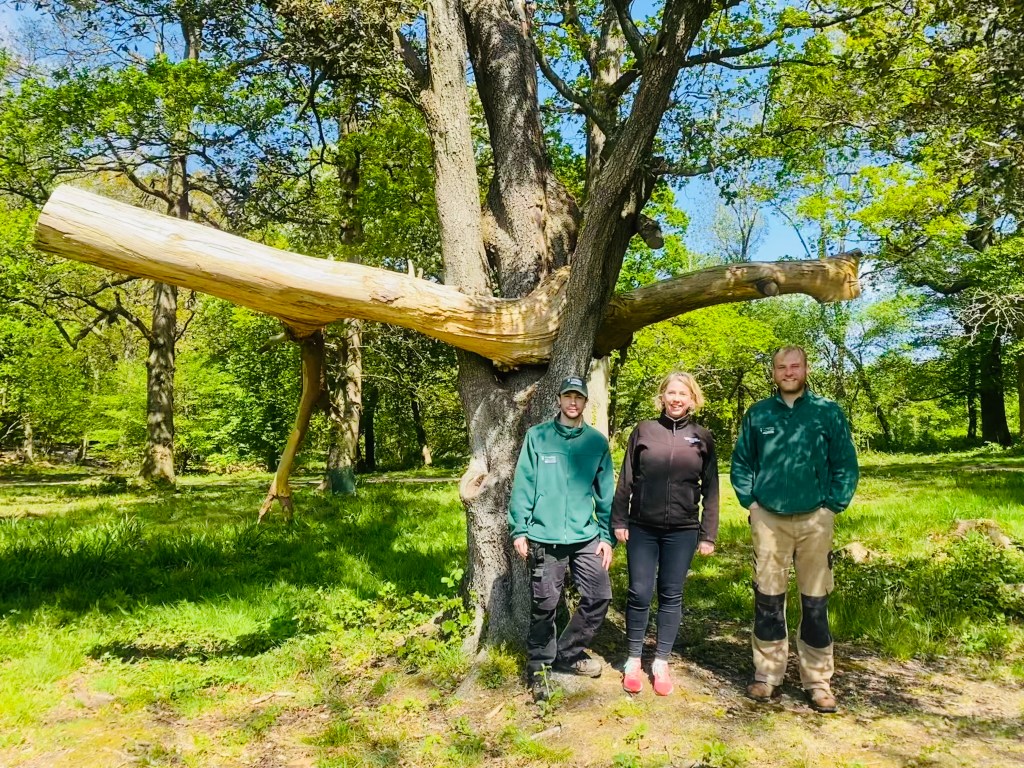
Rather than treating the site as a neutral background, the work uses the site as an active structural condition. The tree, beam, rope, weather, gravity and public setting all become part of the sculptural system.
Position in the Park
Relationships in Space
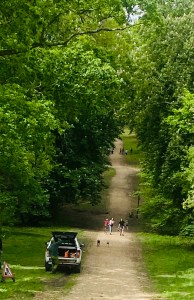
The installation is positioned just beyond one of the main avenues through Staunton Country Park, approximately twenty-five metres from the principal walking route. This position creates a gradual encounter rather than an immediate spectacle. Visitors may notice the sculpture from a distance, discover it unexpectedly while walking, or choose to pause and move around it from multiple viewpoints.
Its location establishes relationships between movement, visibility, landscape and observation. Rather than occupying the centre of attention, the work operates as a quiet intervention within an existing public system, allowing each encounter to develop differently according to the visitor’s pathway, pace and perspective.
Stage One — Site Preparation
Preparing the System
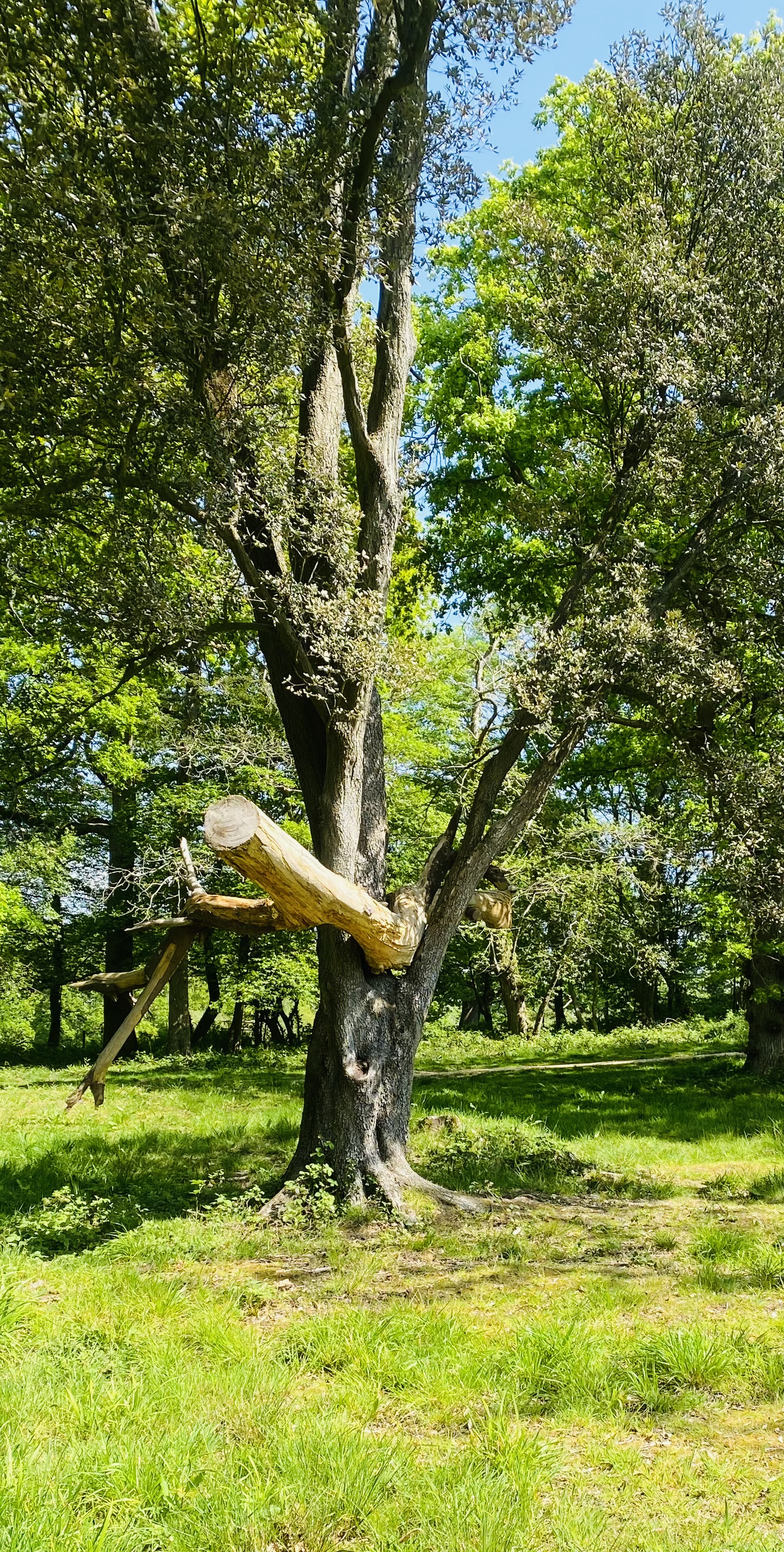
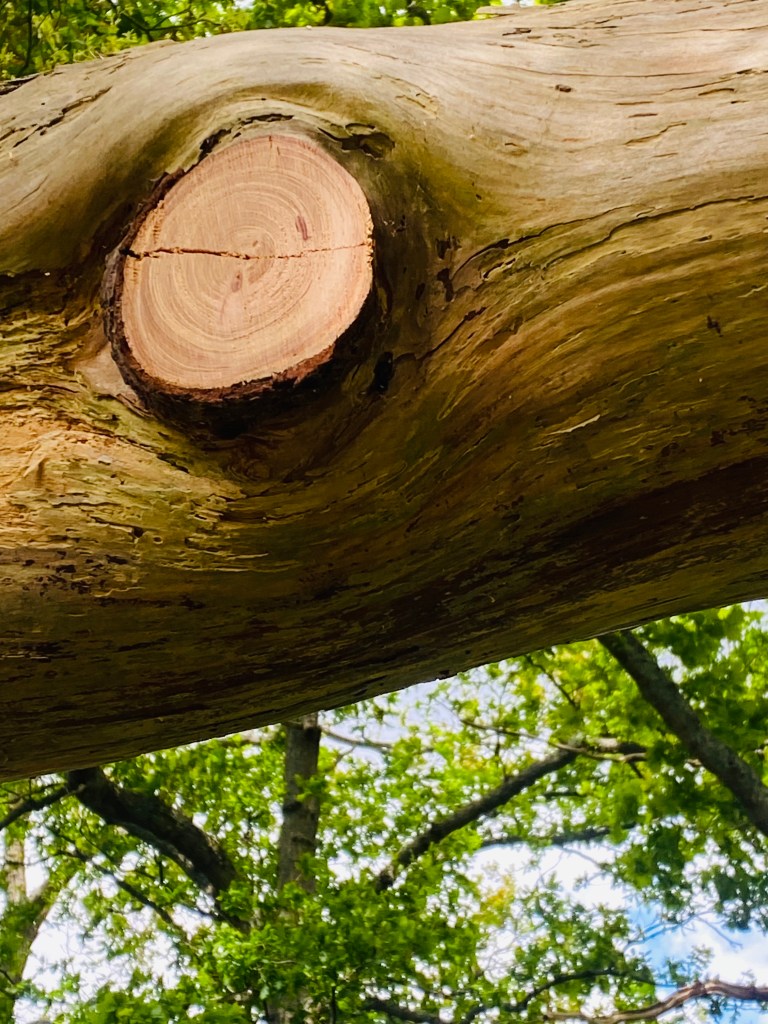
Before installation could begin, the existing landscape required careful preparation. Working with Staunton Country Park Rangers, selected branches were removed to create a safe and structurally appropriate support for the suspended beam and torus forms.
This preparation was not simply practical. It represented the first stage in activating the installation system. Decisions about tree structure, access, safety, permissions and ecological care formed part of the artwork’s development. The existing landscape was therefore negotiated rather than imposed upon, demonstrating how artistic practice emerges through collaboration with institutional, environmental and material systems.
Did you see all this action when you walked through the park that day?
Video: Watch the site preparation and chainsaw work on YouTube.
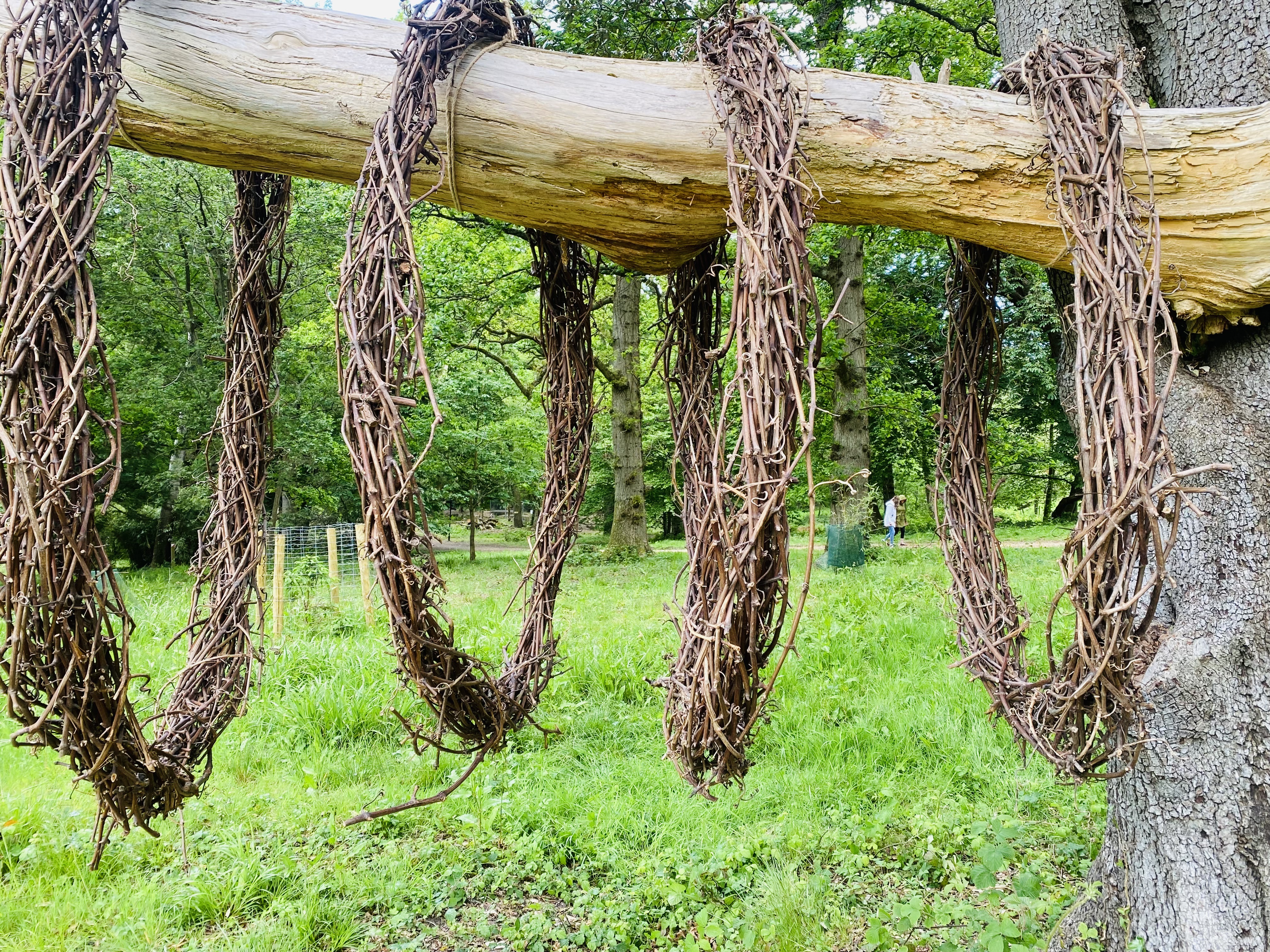
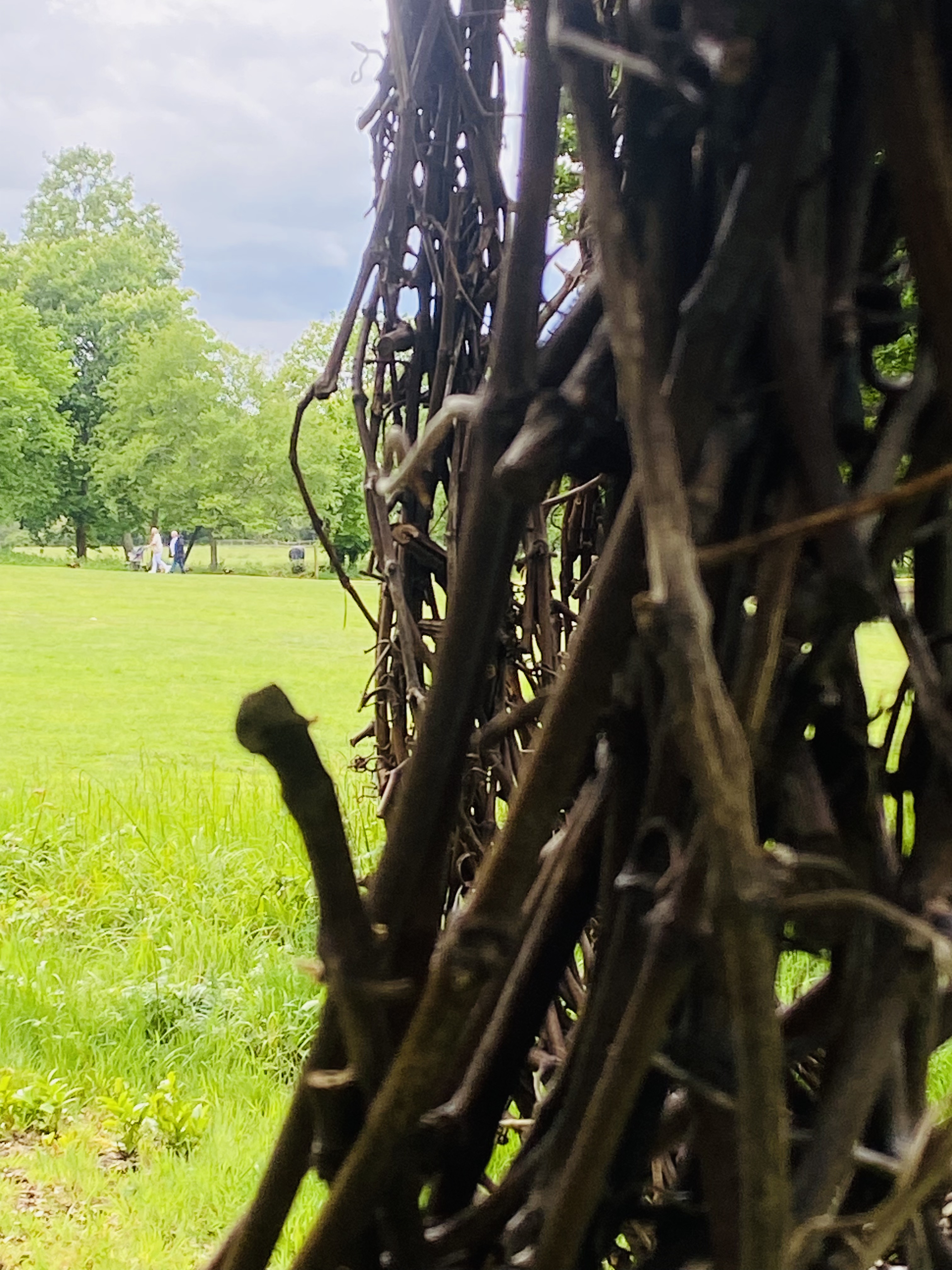
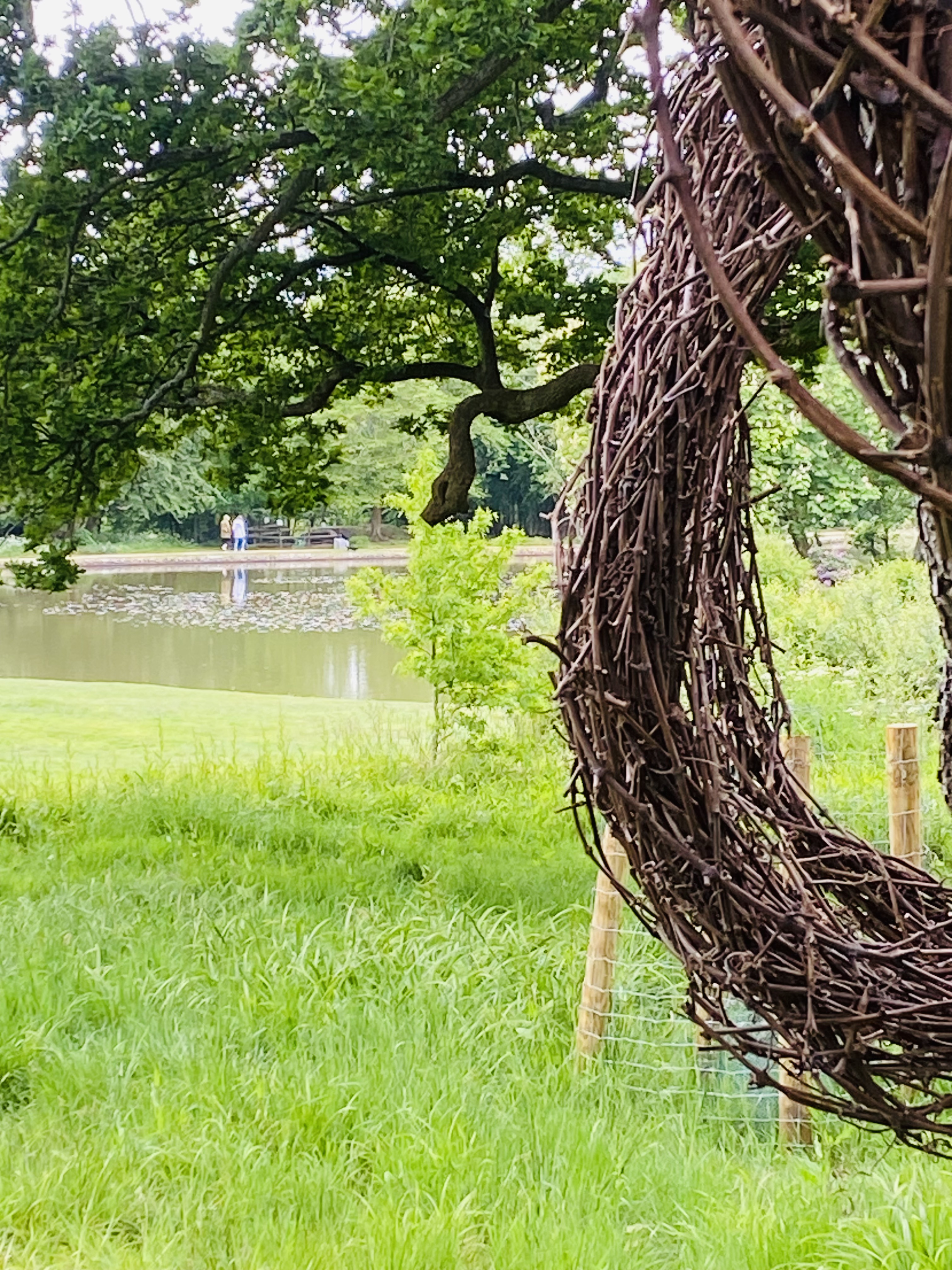
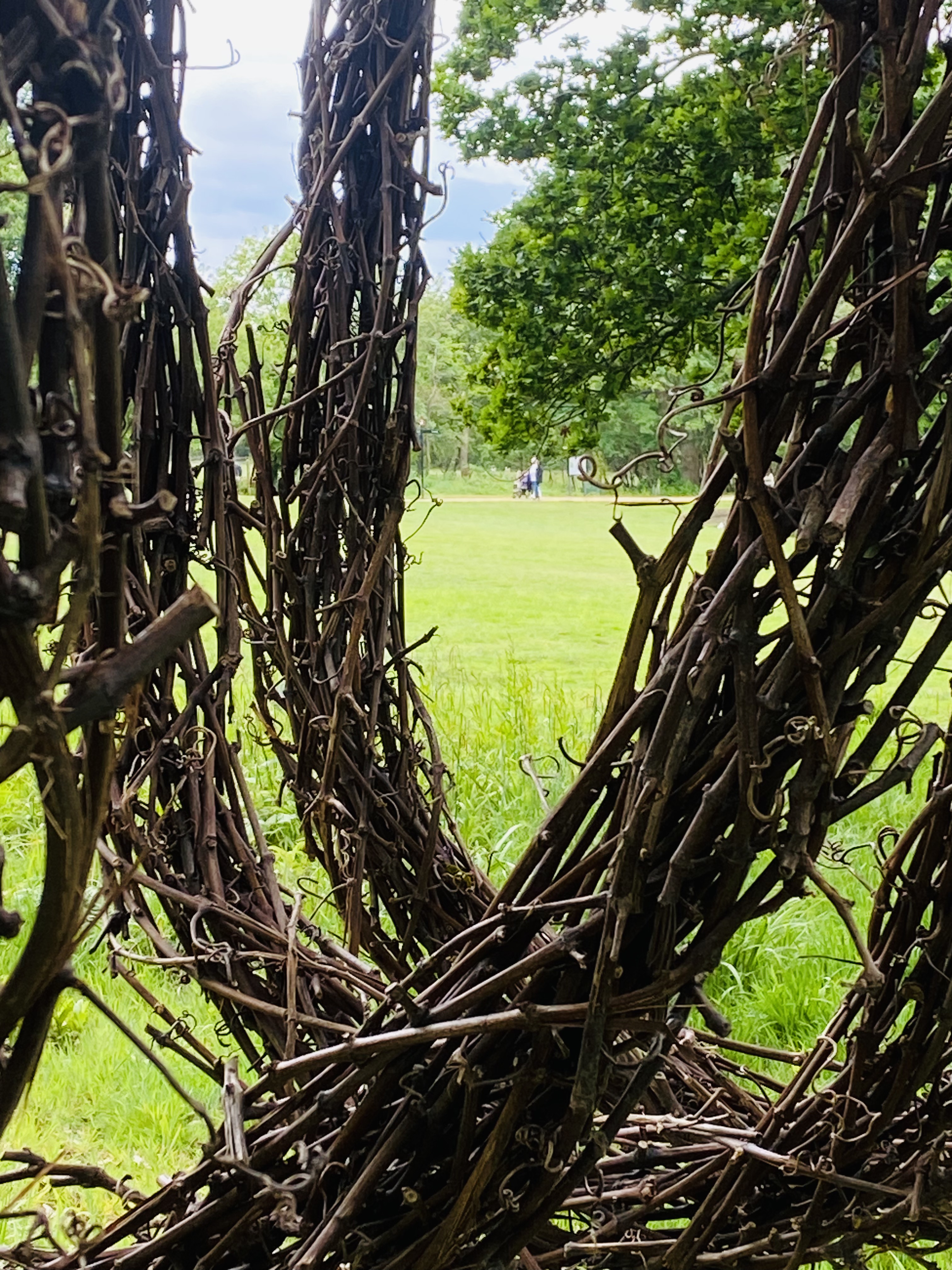
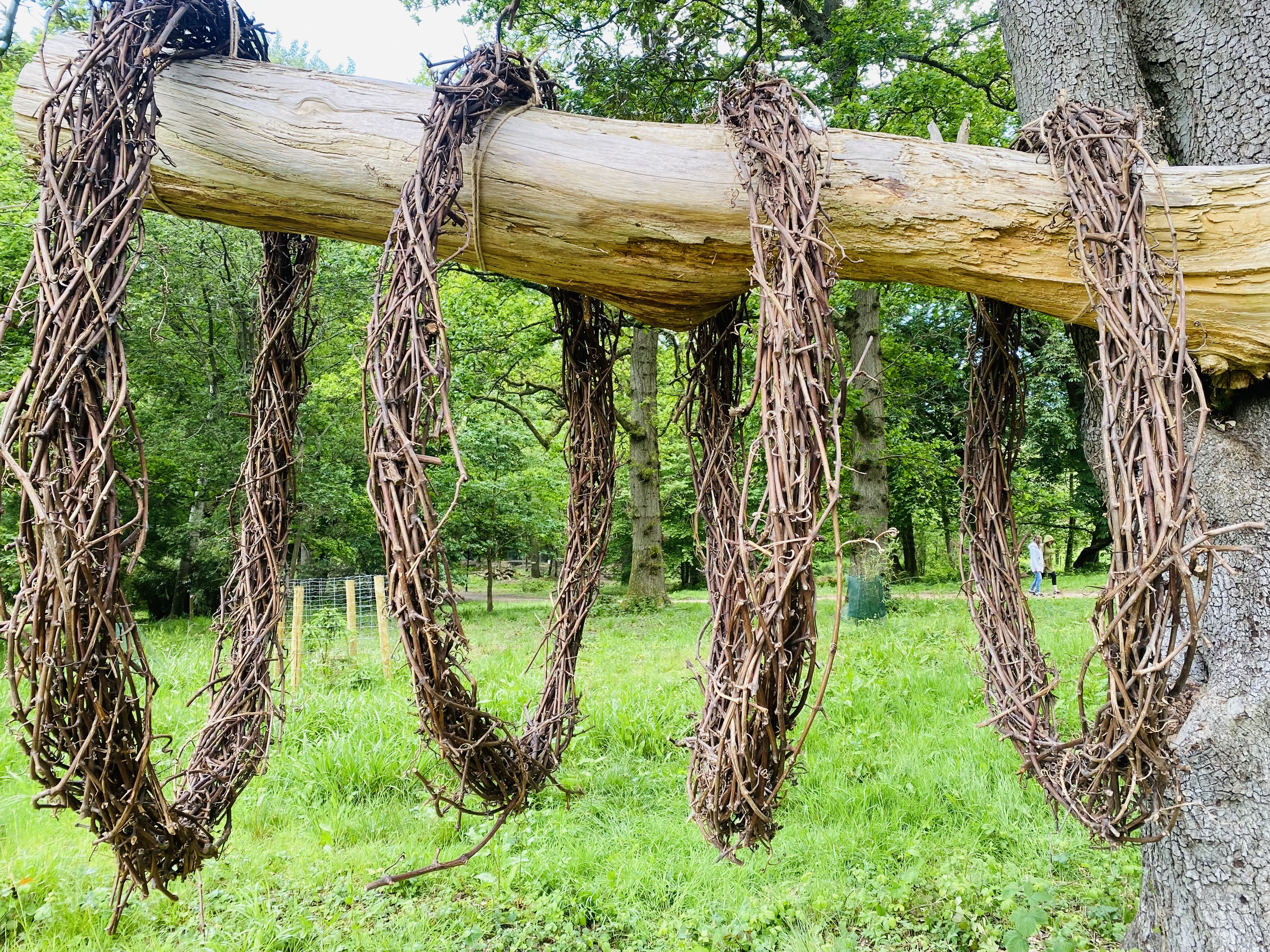
“Perhaps a Squirrel will use them as a treadmill?” Park visitor walking in the park, 15 May 2026
Installation Day
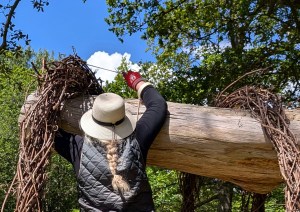
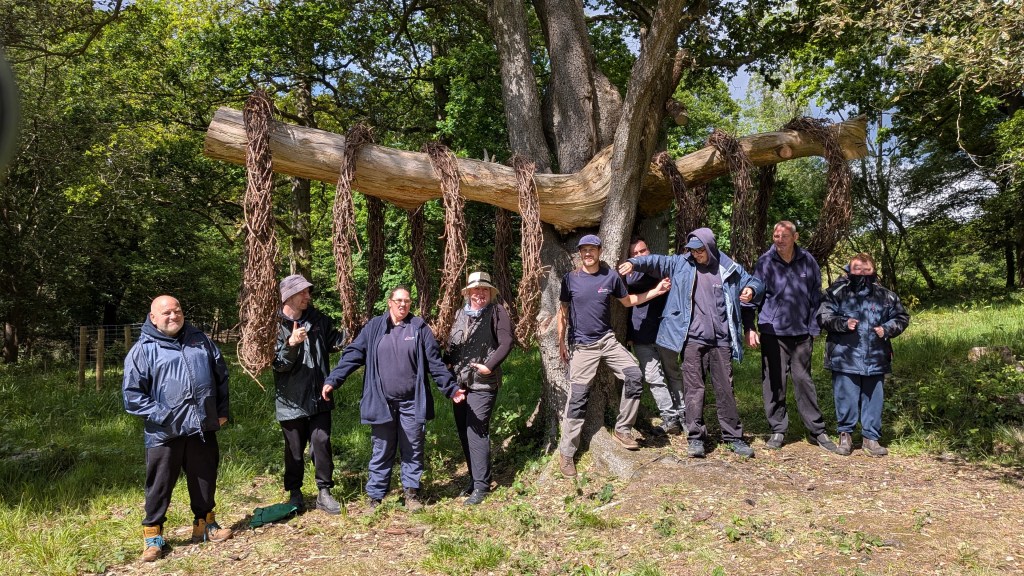
Installed collaboratively in situ with the Red Gloves team from The Right to Work, the work was physically realised over a three-hour installation period at Staunton Country Park on Thursday 14 May 2026. While the sculpture was solo-developed and directed by Dawn Sculthorpe Hayter, the installation process relied upon collective labour, adaptability and shared momentum. Participants moved fluidly between roles including lifting torus forms, stabilising ladders, documenting the process, tying supports and assisting with spatial positioning across the site.
The installation became a live exercise in coordination, physical negotiation and environmental responsiveness. Decisions were made continuously through bodily movement and collective observation: a little to the left, a little to the right, adjusting spacing, balance, tension and visual rhythm in response to the landscape itself.
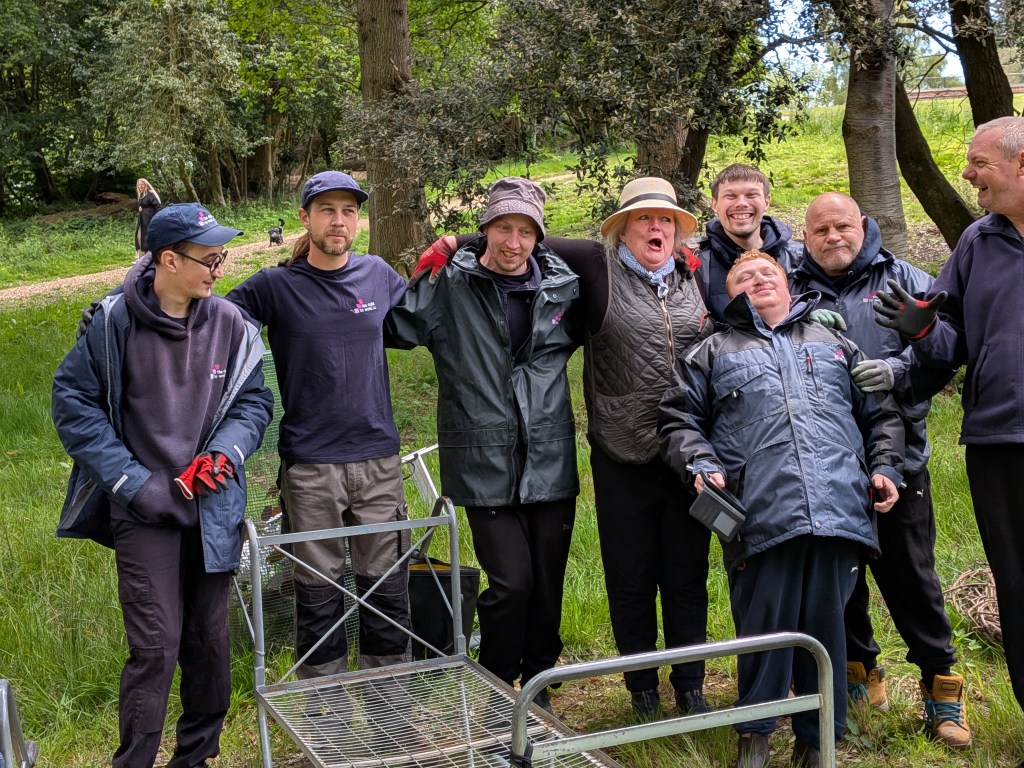
Alongside the physical labour, humour, encouragement and shared energy played an essential role in sustaining the momentum of the work and enabling the large-scale installation to emerge successfully within the landscape.
As ever the Red Gloves did not disappoint and the artist is grateful for the enthusiasm to install and support as much as be the creators of their own art work.
Activating the System
Although the torus forms were individually designed and constructed by the artist, their installation became a collaborative process involving the Red Gloves team. Participants assisted in lifting the suspended beam, positioning the toruses, stabilising ladders, tying supports and continually adjusting the arrangement in response to the site.
The installation marked the point at which seven independent sculptural components became an interconnected system. Balance, spacing, movement, tension and visual rhythm were refined through continual observation and adjustment. Once suspended, the work entered into ongoing interaction with gravity, weather, vegetation and public space, transforming the sculpture from a collection of individual forms into a living installation.
Materials
The materials retain visible evidence of handling, testing and adjustment. The materials remain deliberately direct. They show handling, weathering, pressure and adjustment. The work is not designed as a closed object. It is a temporary public sculpture that continues to register its conditions.
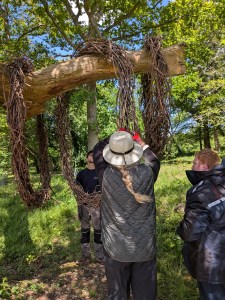
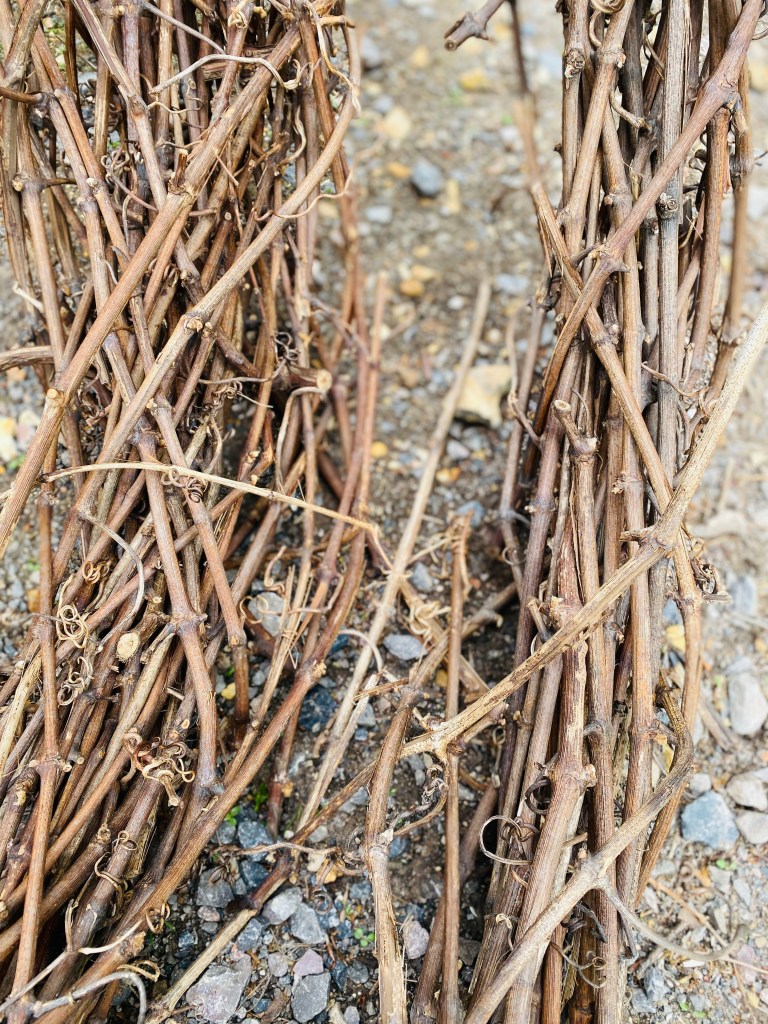
The torus forms were constructed by hand from vine cuttings gathered during the development of the project. Each form retains variation in density, tension, compression and surface. The rope functions both as practical support and as a visible drawing line, marking connection, load and suspension.
Materials as Behaviours
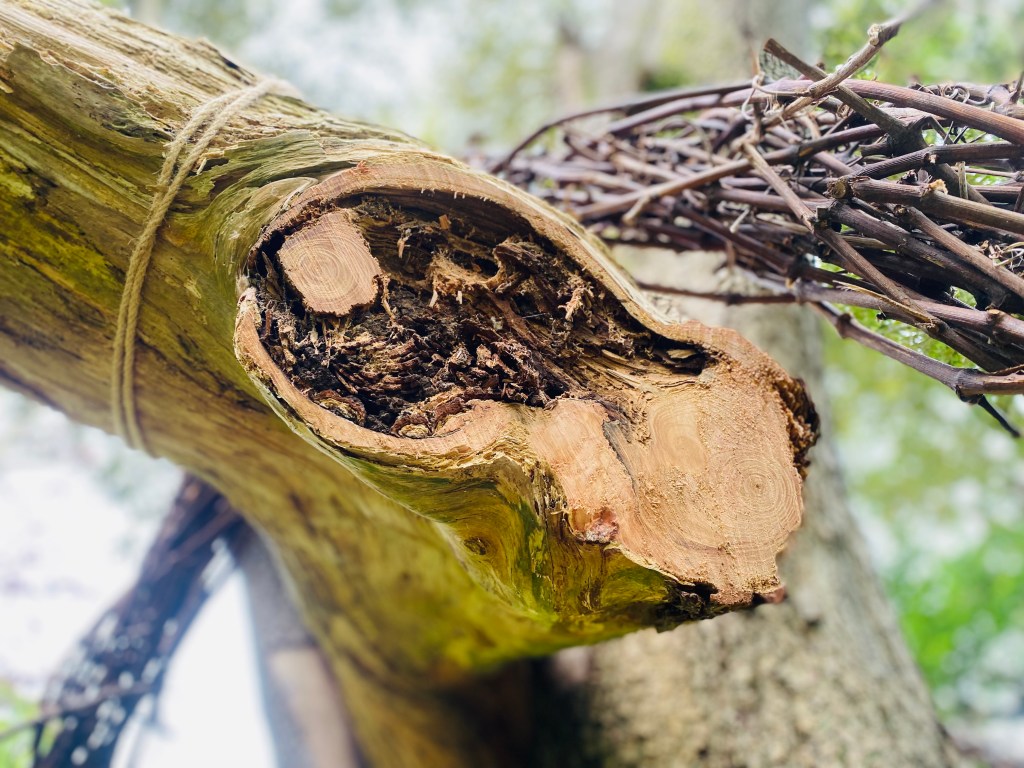
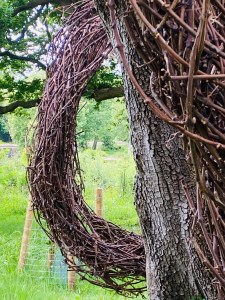
The installation is constructed from hand-woven grapevine torus forms, natural fibre rope, a reclaimed oak beam and the living trees of Staunton Country Park.
Rather than selecting materials solely for their appearance, Tracing Systems employs materials for the behaviours they enable. Vine provides flexibility while retaining structural memory. Rope creates visible relationships through tension, suspension and connection. Timber distributes weight while weather gradually alters surface condition and structural performance.
These materials remain intentionally open to environmental influence. Wind changes movement, moisture changes weight, sunlight alters colour, biological growth transforms surface texture and gradual deterioration becomes part of the work itself. Rather than resisting change, the sculpture records it.
“It looks like barbed wire around a wall in a prison”
Peter, friend of the artist! 16 May 2026
Structure
The sculpture brings seven torus forms into relation with one another through a shared support structure.
Each torus holds its own internal logic. Together, the forms create a larger spatial arrangement based on proximity, balance, compression and movement. The work is not a fixed diagram. It is a physical structure affected by wind, weight, weather and touch.
The installation makes visible the movement between individual form and collective arrangement.
Relationships Create Structure
Each torus retains its own internal identity, having been developed from a distinct organisational experience encountered during the project. Once installed, however, the significance of the work shifts from the individual forms to the relationships between them.
The suspended arrangement creates an interconnected structure in which movement, spacing, balance and proximity continually influence one another. Changes affecting one component are experienced across the wider installation. The sculpture therefore demonstrates a central systems principle: relationships between components generate behaviours that cannot be understood by examining each component in isolation.
“I see a portal, maybe a tunnel?”
Year 9 student, Parks Community School, Hampshire, 20 May 2026.
Relationship to the Co-Authored Work
Tracing Systems began as a participatory sculpture project with co-authors from Right to Work, using torus forms, rope, bodies, land, weather and repeated configuration to explore how people move through systems.
The solo sculpture sits alongside the co-authored torus sculptures developed with the Red Gloves group.
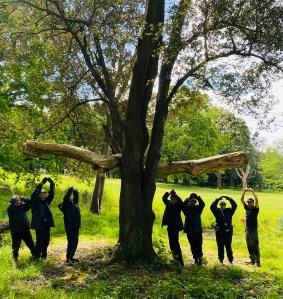
Where the co-authored works explore collective configuration, shared decision-making and participatory structure, this solo installation extends the torus language into a public site-specific form. It extends the inquiry into a public site-specific form. It translates the project’s core questions into a larger installation: how structures hold, restrict, support, connect and move in response to changing conditions.
Together, the works show two related strands of Tracing Systems: collective making and solo translation.
From Collective Exploration to Living System
Earlier phases of Tracing Systems invited participants to explore multiple sculptural possibilities by rearranging the same seven torus forms into different configurations. Those co-authored works investigated how new forms could emerge through collective decision-making and changing relationships between components.
This solo installation extends that inquiry beyond human participation. Rather than participants continually rearranging the toruses, environmental processes become active contributors. Wind, weather, gravity, wildlife and time now participate in shaping the work. The project therefore shifts from exploring collaborative authorship to investigating how sculptural systems continue to evolve once released into a living environment.
Development
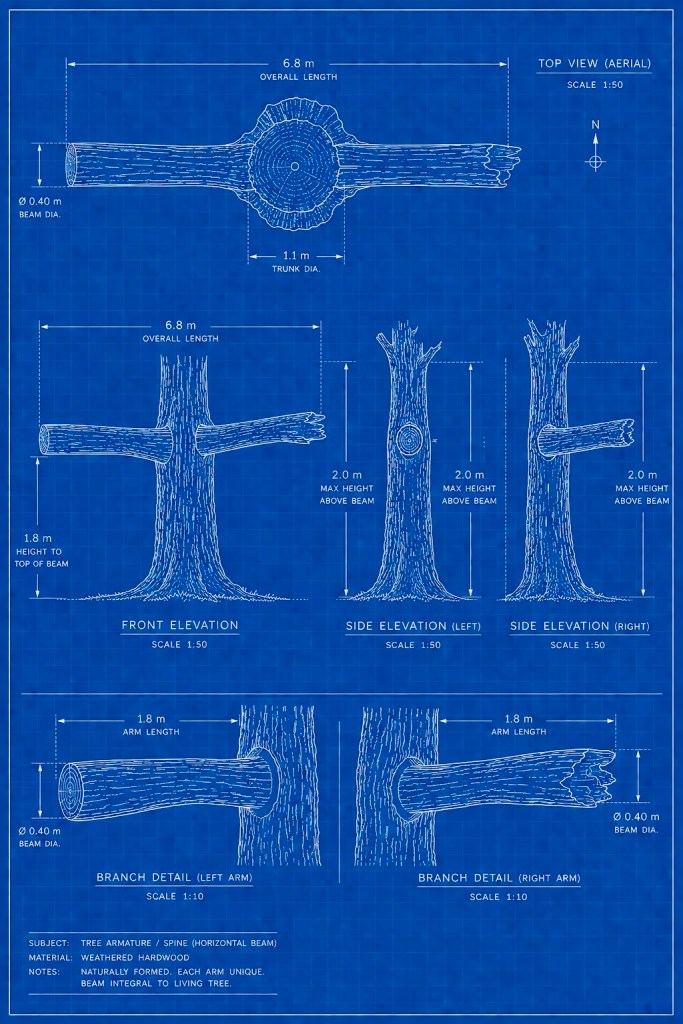
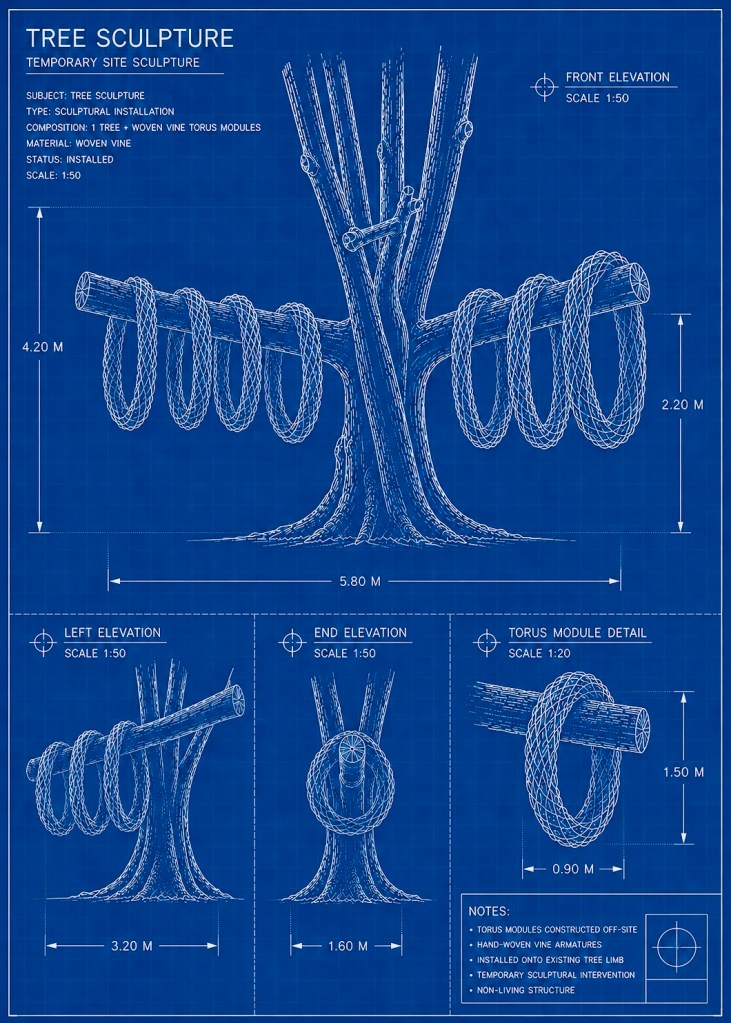
The solo sculpture emerged from the wider Tracing Systems project, which explored how lived experience of external systems could be translated into sculptural form.
This sculpture developed from a series of maquettes, rope tests, scale experiments and site observations.
An earlier vertical installation study tested height, vertical suspension, spacing and the use of a denuded tree as a central support. The final installed work emerged through this process but shifted in response to site conditions, available structure and practical installation constraints.
The development process remains part of the work. It records the movement from proposition to site-responsive decision.
Designing Through Feedback
The installation developed through successive cycles of observation, prototyping and refinement. Scale models, engineering sketches, rope trials, site visits and structural studies were used to explore alternative arrangements before the final installation was realised.
These studies were not simply preliminary drawings but part of an iterative design process. Each prototype generated new information that informed subsequent decisions, demonstrating how the sculpture evolved through continual feedback between concept, material behaviour, site conditions and practical constraints
Development study: Tracing Systems — Vertical Installation Study
Documentation
Observing System Behaviour
The documentation presented on this page records the continuing life of the installation rather than a completed artwork.
Photographs, drawings, measurements and video capture changing relationships between the sculpture, the landscape and those who encounter it. They document installation, weathering, maintenance, environmental interaction and gradual material transformation. Together these observations provide evidence of how the work adapts over time, allowing the sculpture to be understood not as a fixed object but as a complex adaptive system whose behaviour continues long after installation.
The images on this page document:
- site preparation and material testing
- construction of individual torus forms
- rope and suspension trials
- scale and positioning decisions
- installation with site collaborators
- the final sculptural arrangement in the park
Follow the Tracing Systems journey on Instagram or Facebook @SculthorpeStudios.
Stay tuned the Red Gloves have more projects to share with you at Staunton Country Park
Case Study 3
A site-responsive environmental sculpture examining how form is shaped through time, gravity, tension, weather and sustained interaction with dynamic systems environments.
A documentary film of the installation, its development and its transformation can be viewed below.
 SculthorpeStudios