Tracing Systems – Phase 5
Developed through long-duration material experimentation, participatory collaboration and environmental installation, the work exists as both sculptural form and evolving behavioural condition within the landscape.
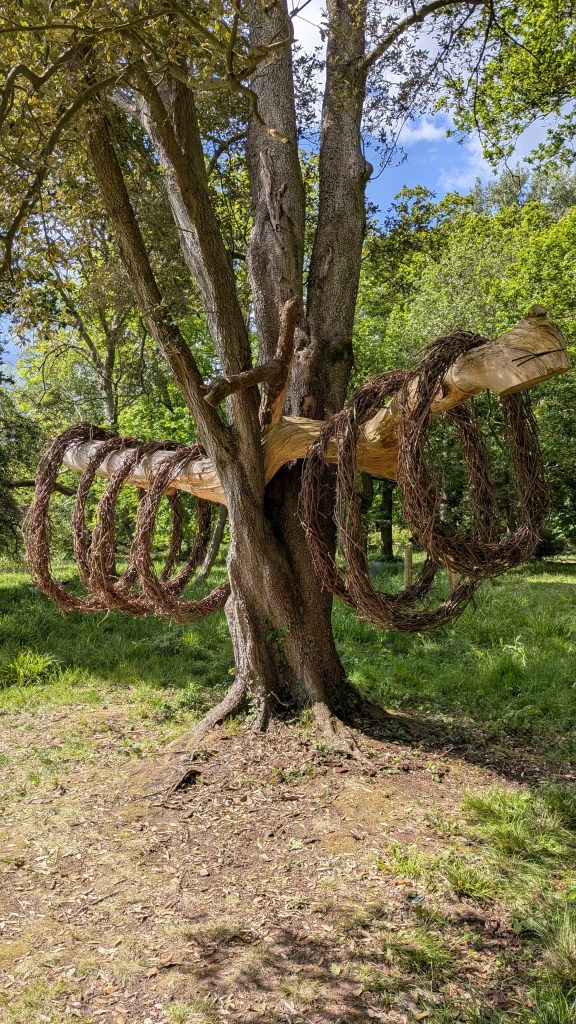
Temporal Monitoring of the System
Following installation, the role of the artist shifted from designer and maker to observer. Rather than preserving the sculpture in a fixed state, Tracing Systems entered a longitudinal period of observation, documenting how the installation evolved through continuous interaction with environmental, ecological and social systems.
Each photographic record was captured from the same fixed observation point beneath the red-leafed beech, approximately thirteen metres from the sculpture. Maintaining a constant viewpoint allows changes in form, material behaviour and spatial relationships to be observed over time. The resulting image sequence documents not only the gradual weathering of individual torus forms, but the ongoing transformation of the sculpture as a whole.
The installation was conceived as an interconnected system rather than a static object. At installation, the seven toruses formed a carefully balanced horizontal composition despite their differing diameters, creating a coherent spatial geometry across the suspended beam. Over time, that initial equilibrium has been progressively altered through the cumulative effects of wind, gravity, rainfall, sunlight, biological activity, seasonal change and public interaction. Individual toruses have stretched, compressed, rotated and deteriorated, while the overall structure has gradually shifted away from its original geometry. The sculpture therefore records not simply material decay, but the continual reorganisation of relationships within the system.
This longitudinal record demonstrates a fundamental principle of systems thinking: change emerges through the accumulation of many small interactions rather than a single transformative event. No individual force determines the sculpture’s development. Instead, environmental conditions, ecological processes, material properties and the passage of time continually interact, producing patterns of adaptation that could not be predicted at the moment of installation. The work becomes evidence of an evolving socio-ecological system rather than a fixed sculptural composition.
Across the six-month installation, the sculpture passes through successive seasonal conditions, from the growth and instability of spring, through the warmth, biological activity and prolonged sunlight of summer, towards the changing environmental conditions of early autumn. These seasonal cycles act not as a backdrop but as active participants in the work, influencing moisture content, material tension, biological colonisation, movement and structural change. Time therefore operates as more than a measurement of duration; it becomes an active process through which interactions accumulate and new behaviours emerge.
Field Station
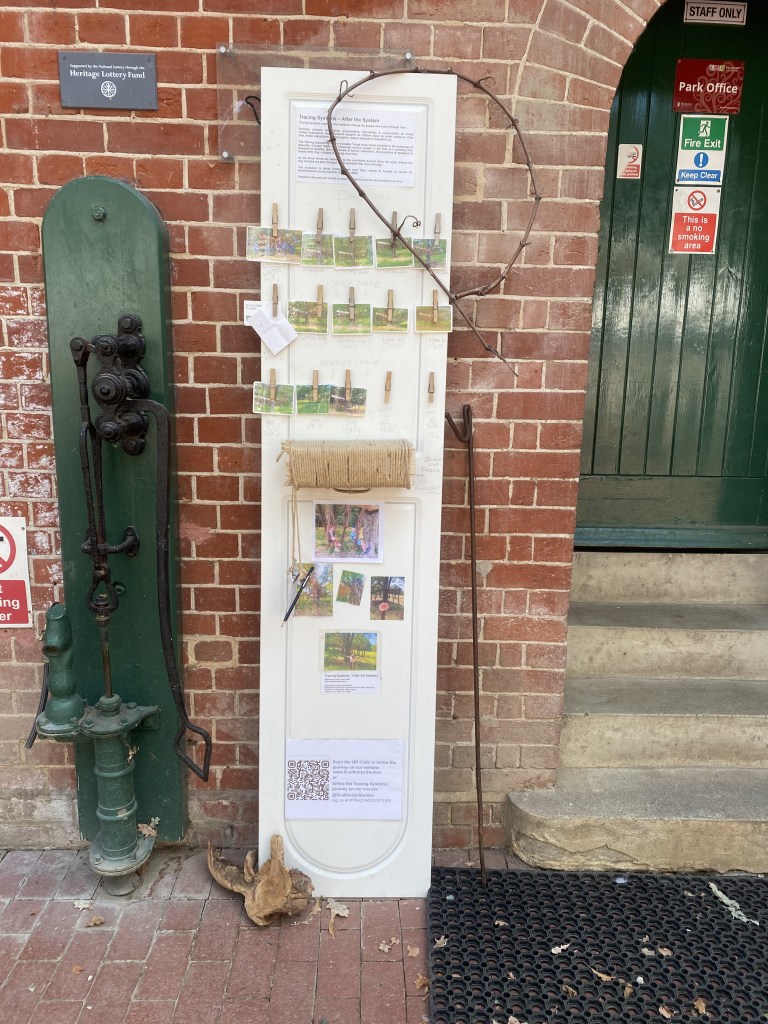
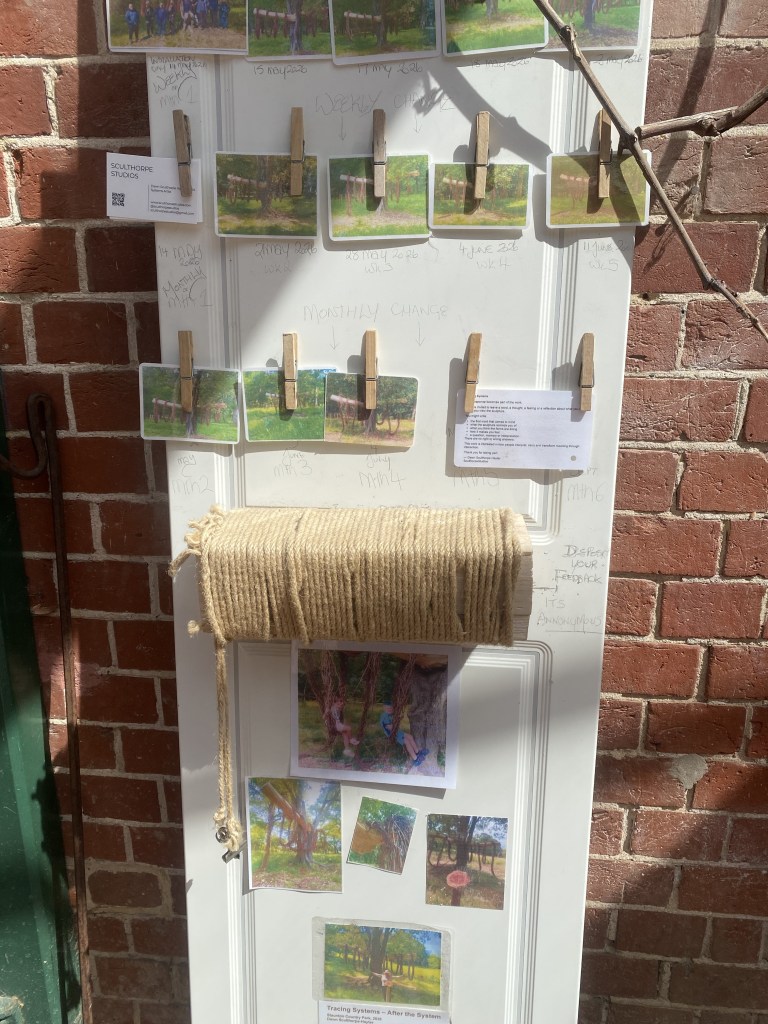
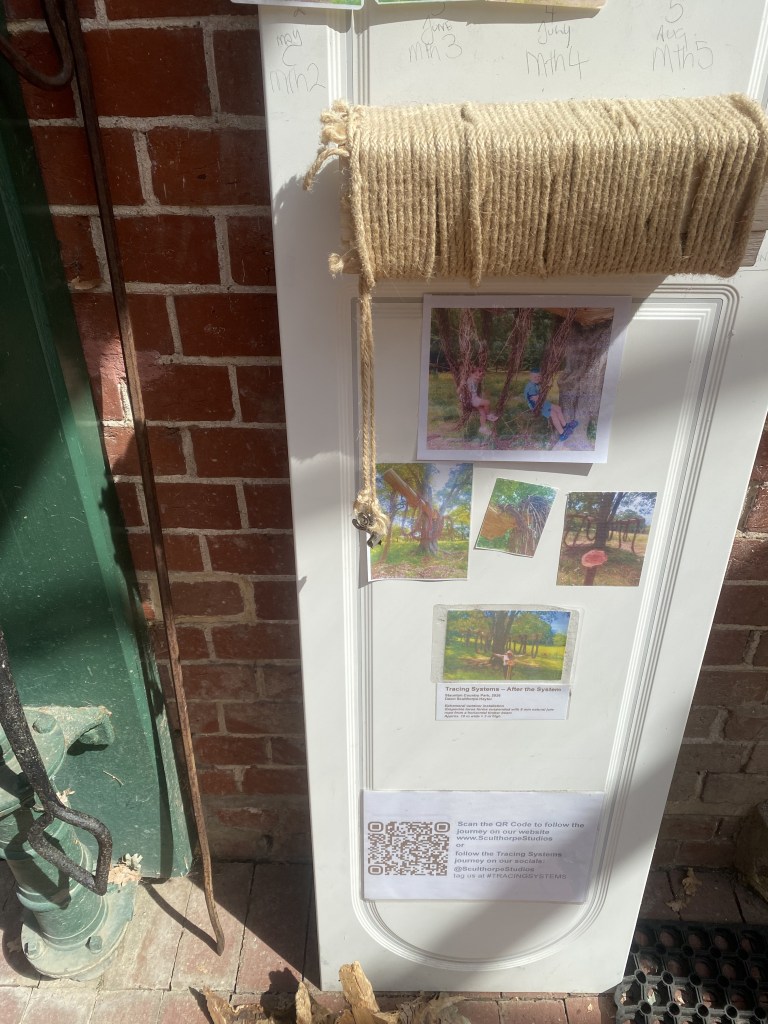
Distributed Observation
Alongside the website, Tracing Systems established a public Field Station within the Coach House Courtyard at Staunton Country Park. Rather than limiting documentation to digital audiences, the Field Station created an accessible point where regular park visitors could observe the sculpture’s ongoing transformation without needing to visit the installation itself on every occasion.
The Field Station combines project information, examples of the sculpture’s materials and a longitudinal photographic record showing the installation at successive stages of its development. Beginning with daily observations, followed by weekly and monthly records, the display allows visitors to compare changes over time and observe how the sculpture responds to seasonal conditions, environmental forces and material transformation. By presenting each image alongside those that came before it, change becomes visible as a cumulative process rather than a series of isolated events.
Importantly, the Field Station also invited public participation. Visitors were encouraged to leave written reflections describing what they noticed, experienced or interpreted when encountering the sculpture. These responses became part of the project’s documentation, extending observation beyond the artist’s perspective. Rather than positioning the audience as passive viewers, the Field Station incorporated them into the wider system of observation, creating an ongoing exchange between artwork, landscape and community.
The Field Station therefore functioned as more than an interpretive display. It became a distributed observation point within the project itself, supporting long-term engagement with change over time and encouraging visitors to recognise that the artwork was continually evolving. In doing so, it expanded the sculpture beyond its physical location, connecting the installation, the public and the documentation into a broader system of shared observation.
Structured Longitudinal Documentation
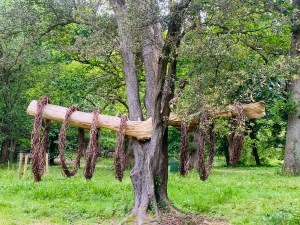
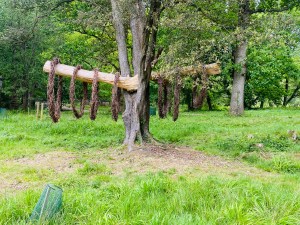
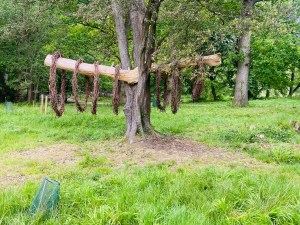
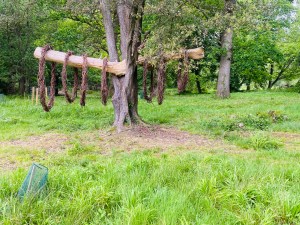
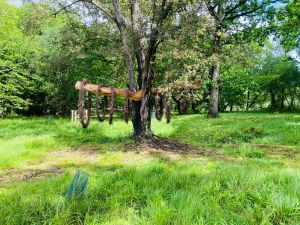
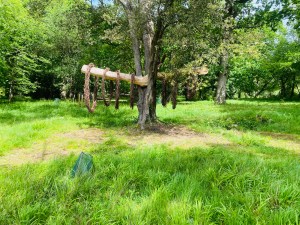
All images in this series are photographed from the same fixed observation point beneath the red-leafed beech approximately 13 metres from the sculpture. The repeated viewpoint creates a longitudinal visual record of environmental change, material weathering and seasonal transformation across the six-month installation period.
Weekly Capture
The following images represent weekly capture. Every Thursday for the next three weeks a photo is taken. Providing us a record of four weeks in a row. After 4 weeks I would expect some environmental degradation, perhaps some increase in human interaction that accelerates the breakdown of the torus and even perhaps animal engagement with the torus. Lets see.
Week 1, Thursday 14 May 2026 – Installation Day.
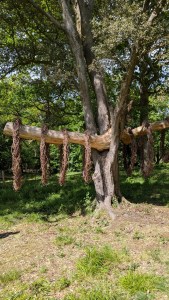
Week 2, Thursday 21 May 2026 (actually this was Friday 22nd – because Thursday was consumed preparing the signage of site!)
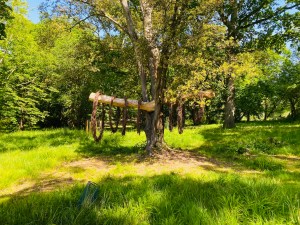
Week 3, Thursday 28 May 2026
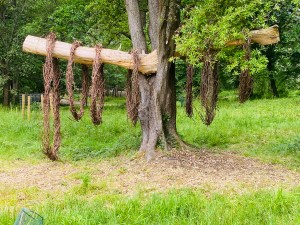
Week 4, Thursday 4 June 2026
Monthly
The following images represent monthly capture. At the end of each month during May, June, July, August, Sept and October a photo is taken. Providing us a record of the noticeable changes each month.
MAY 2026
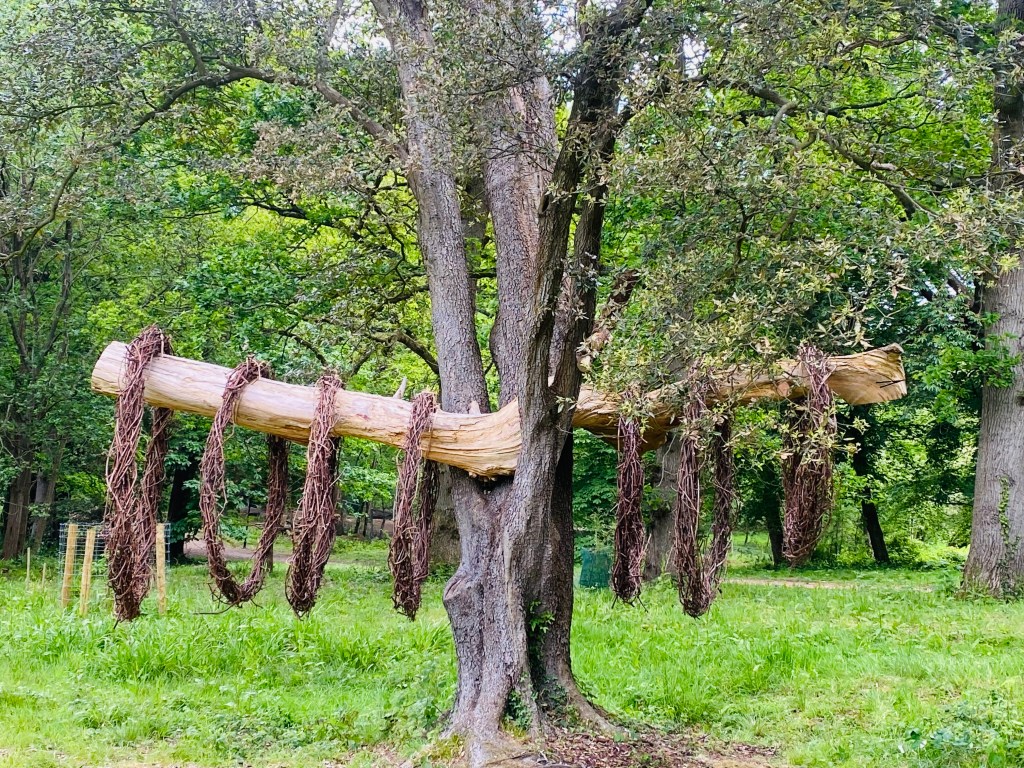
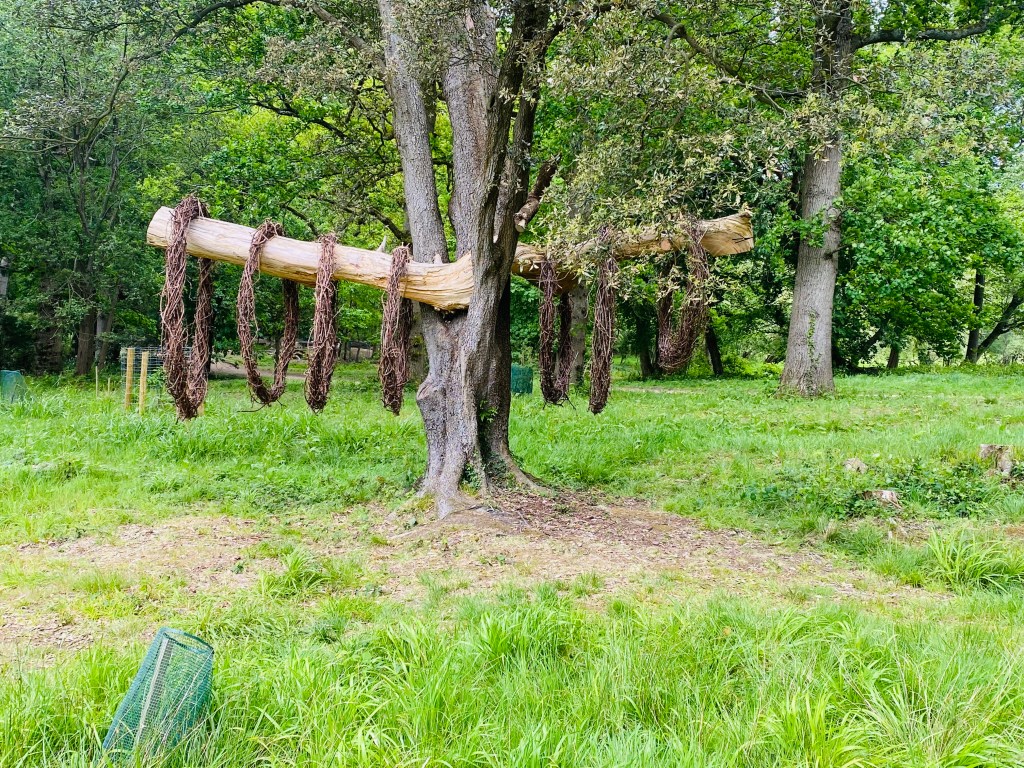
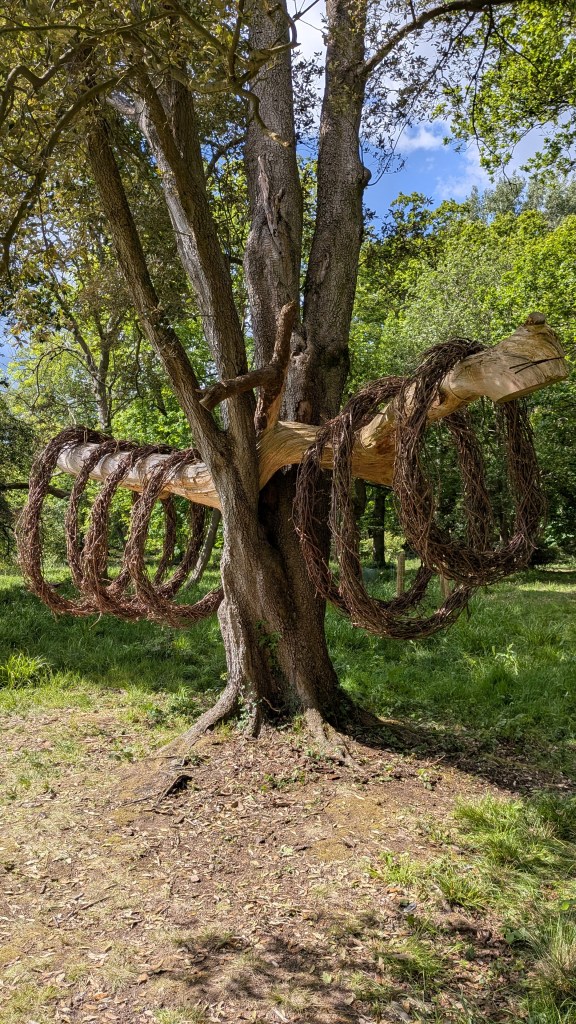
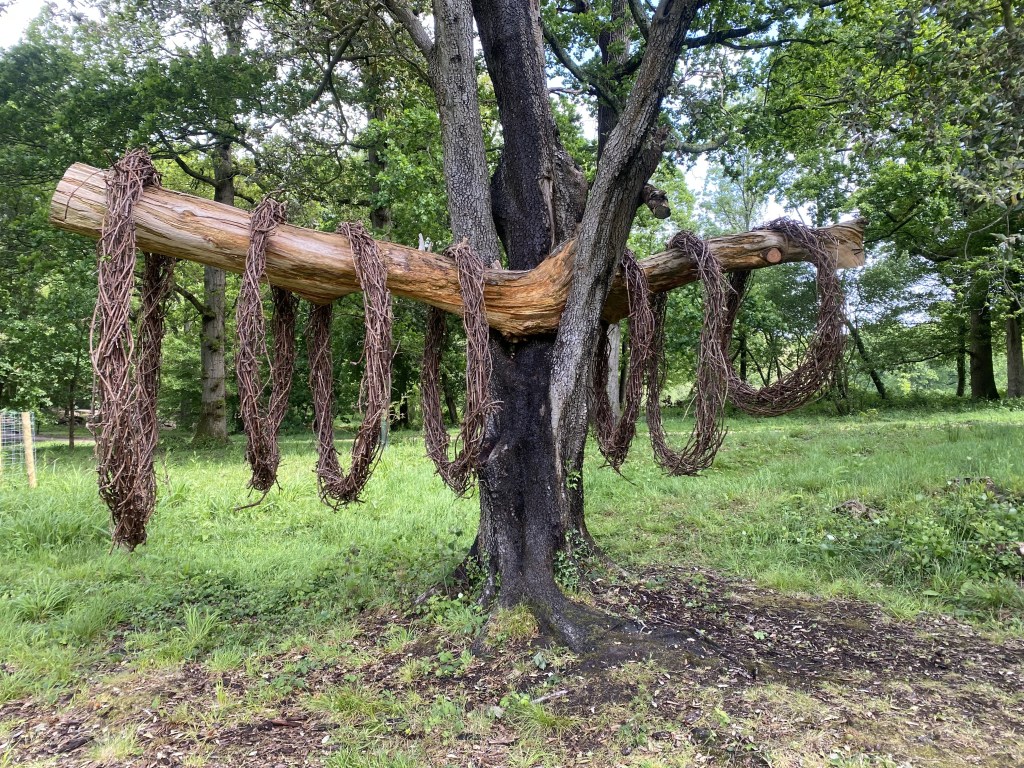
In May we installed and the geometry of Tracing Systems was aesthetically very pleasing. The rhythm of the torus with equal spacing along the beam and carefully ordered to achieve a straight lower edge to accommodate the angles of the beam. The rain increased the contrast. The lighter beam with the darker wood of the vine torus set against the dark brown of the tree trunk and the vibrant green of grass and foliage was dramatic.
JUNE 2026
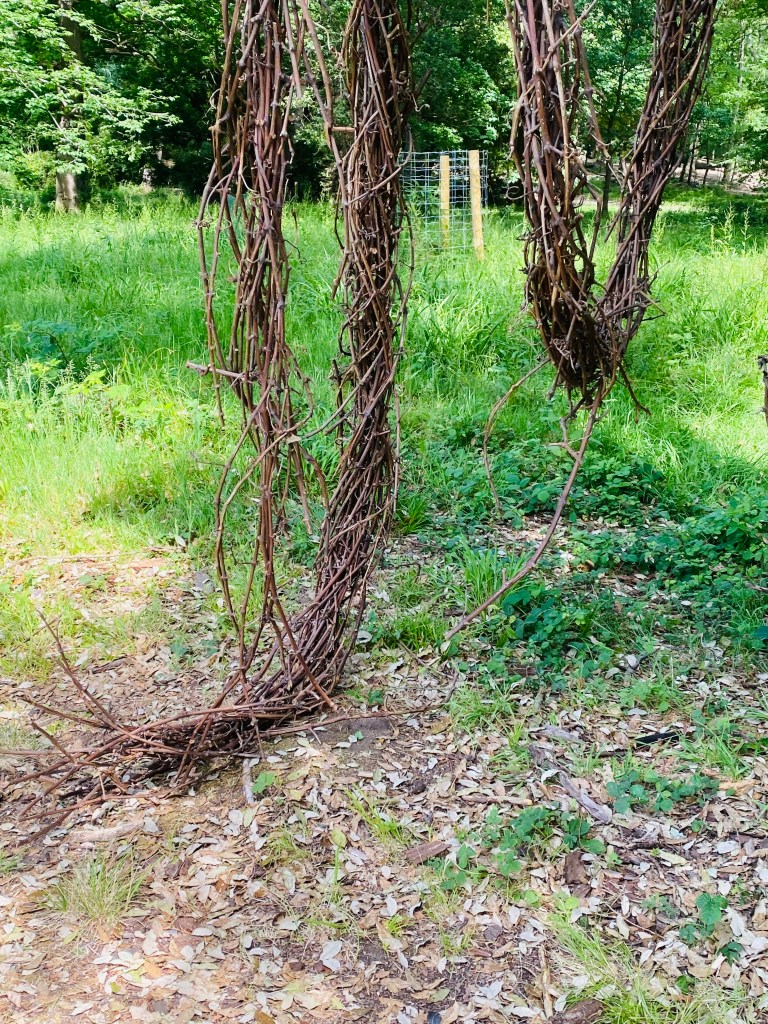
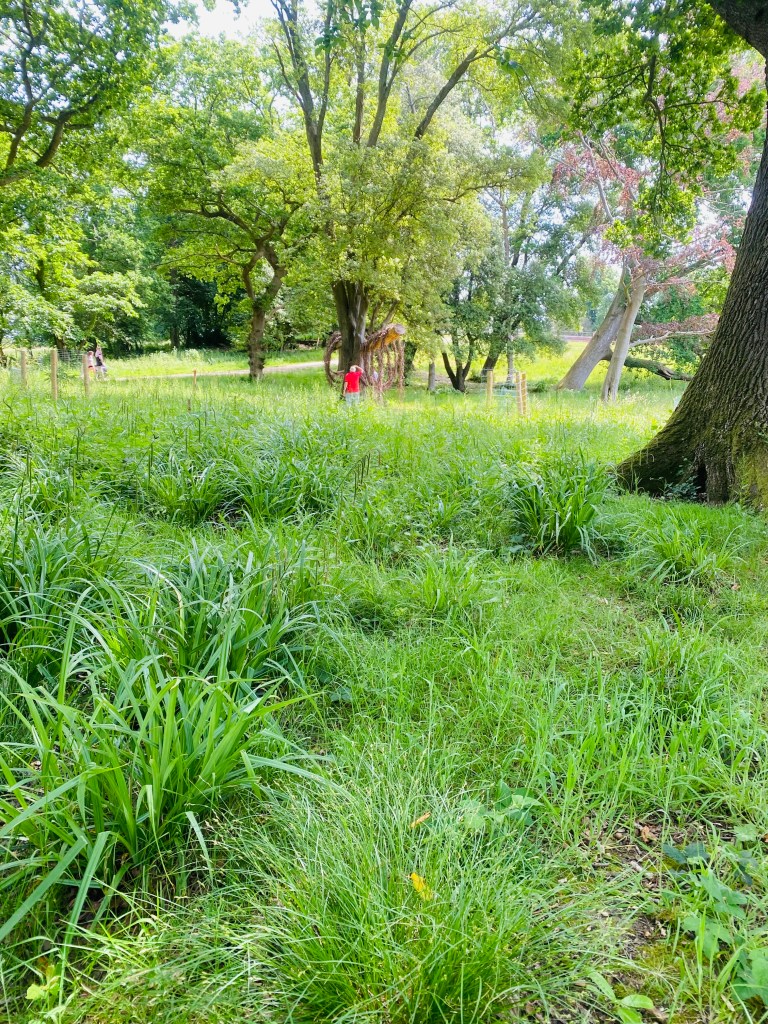
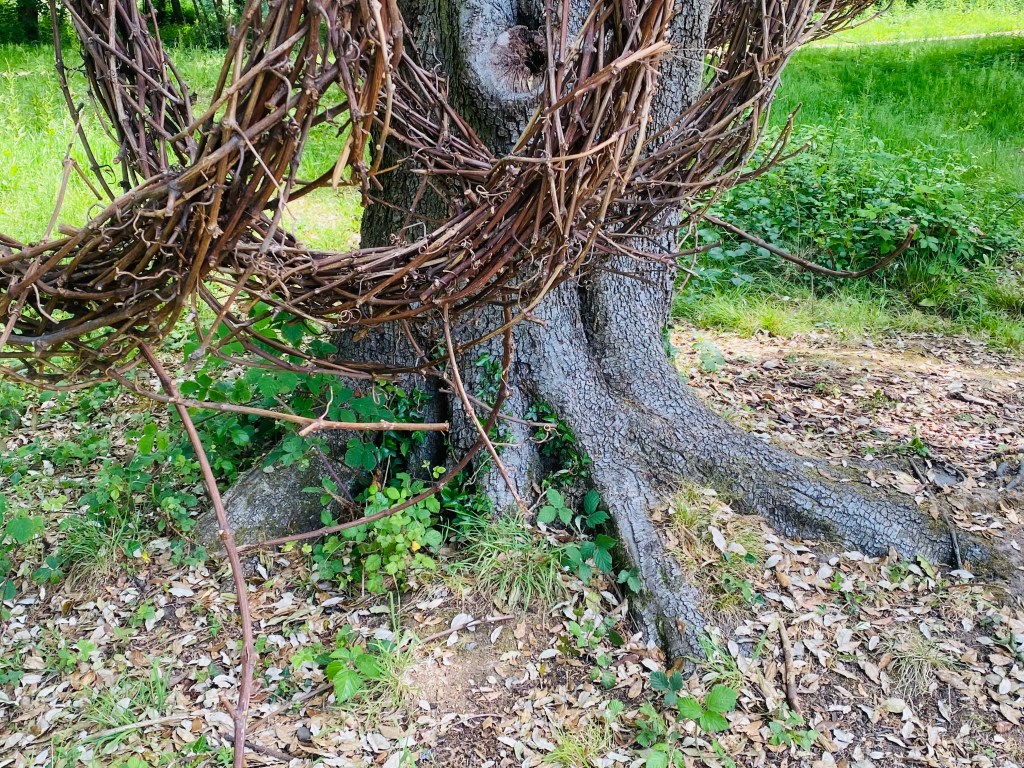
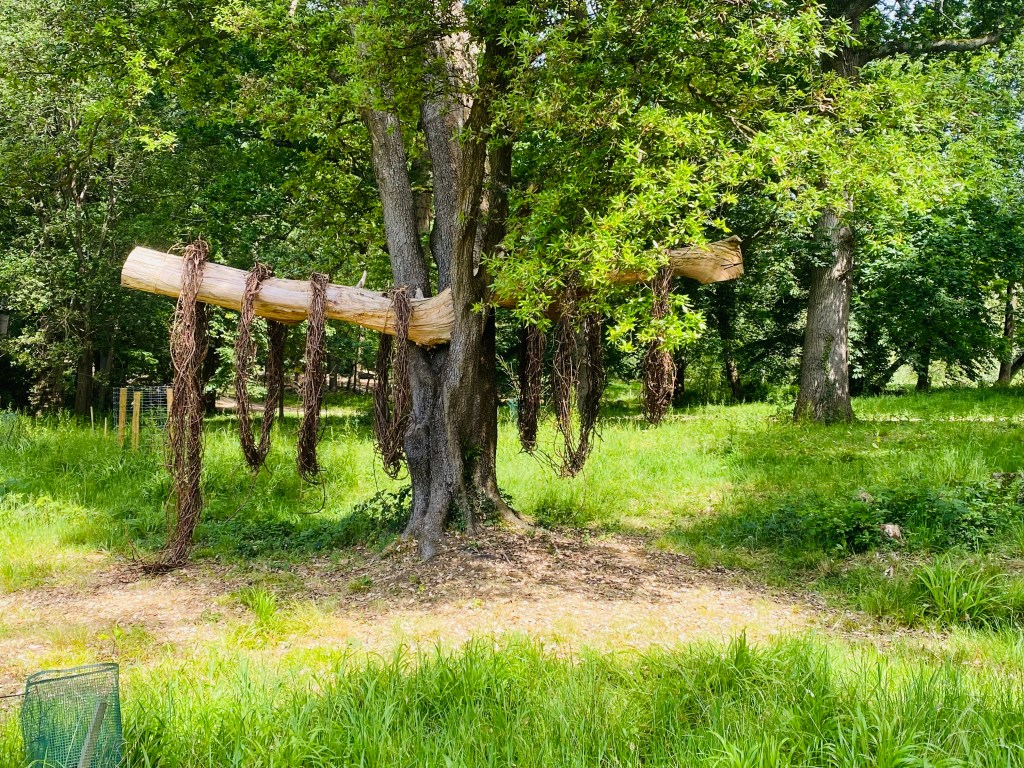
As we entered June the first major change was seen in Torus 1 and Torus 5. Torus 1 completely opened and began to lie gently on the soil while still confidently holding onto the beam. Torus 5 had begun to stretch and tear. People were seen interacting with the sculpture approaching to explore.
JULY 2026
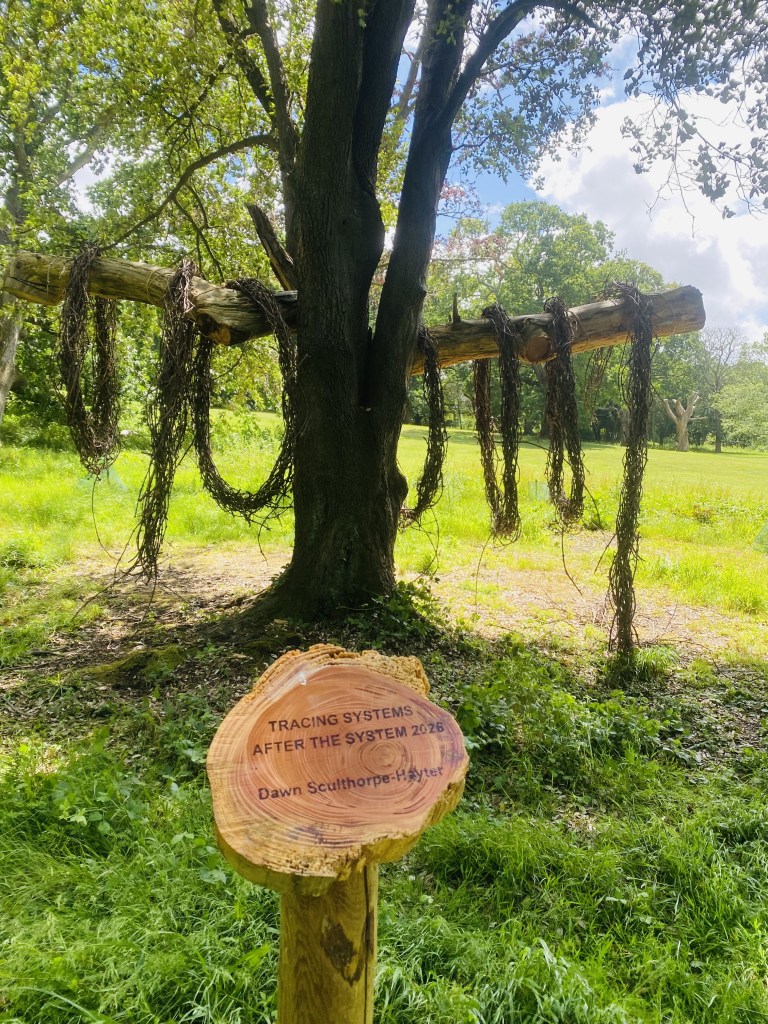
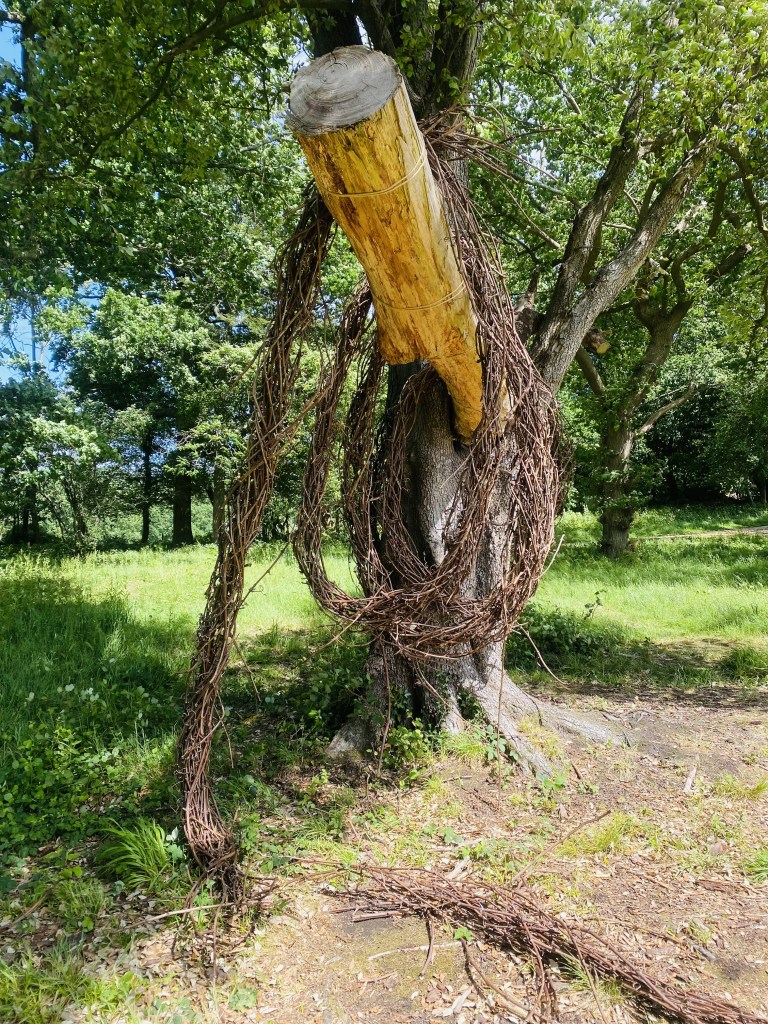
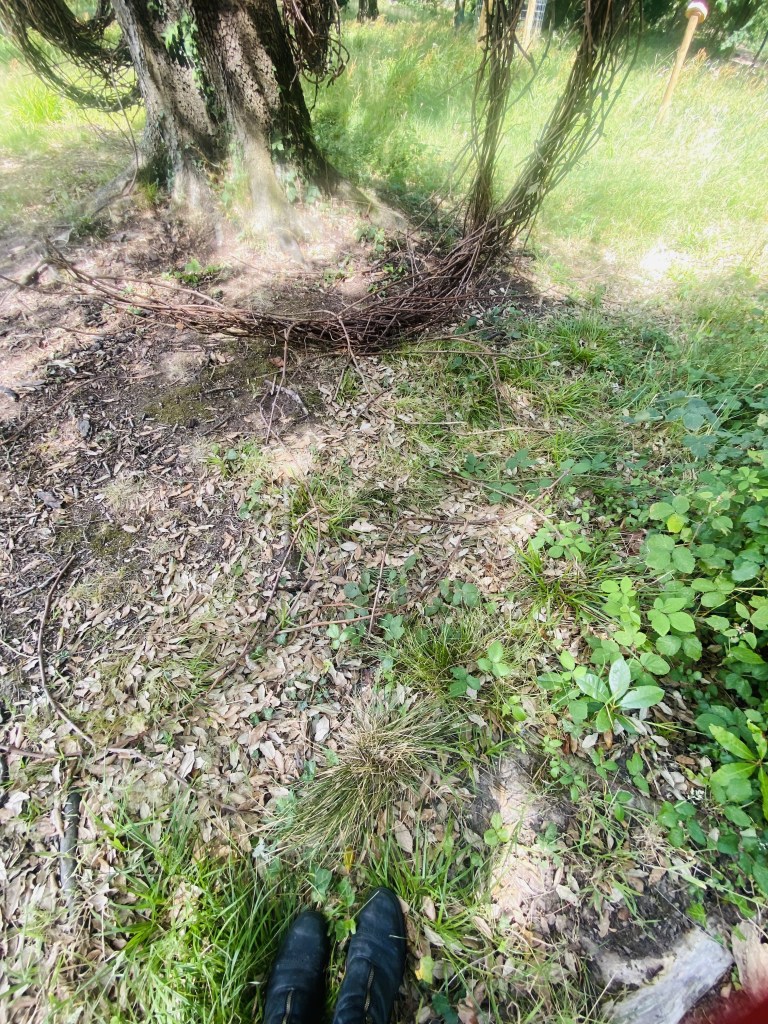
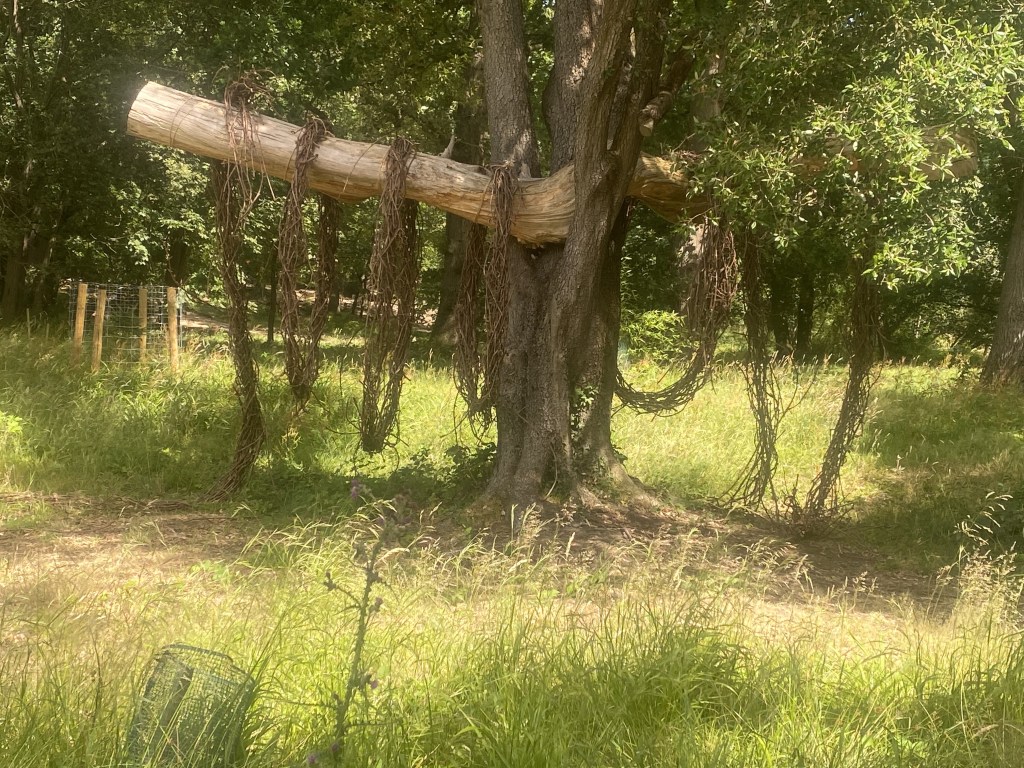
As we entered July the Torus 1 began to deteriorate on the ground. Torus 6 and 7 had now completely opened and Torus 5 had twisted on the beam. As the weather became hotter and the ground dried we lost the clarity of the green grass and moved to a yellow highlighted contrast.
AUGUST 2026
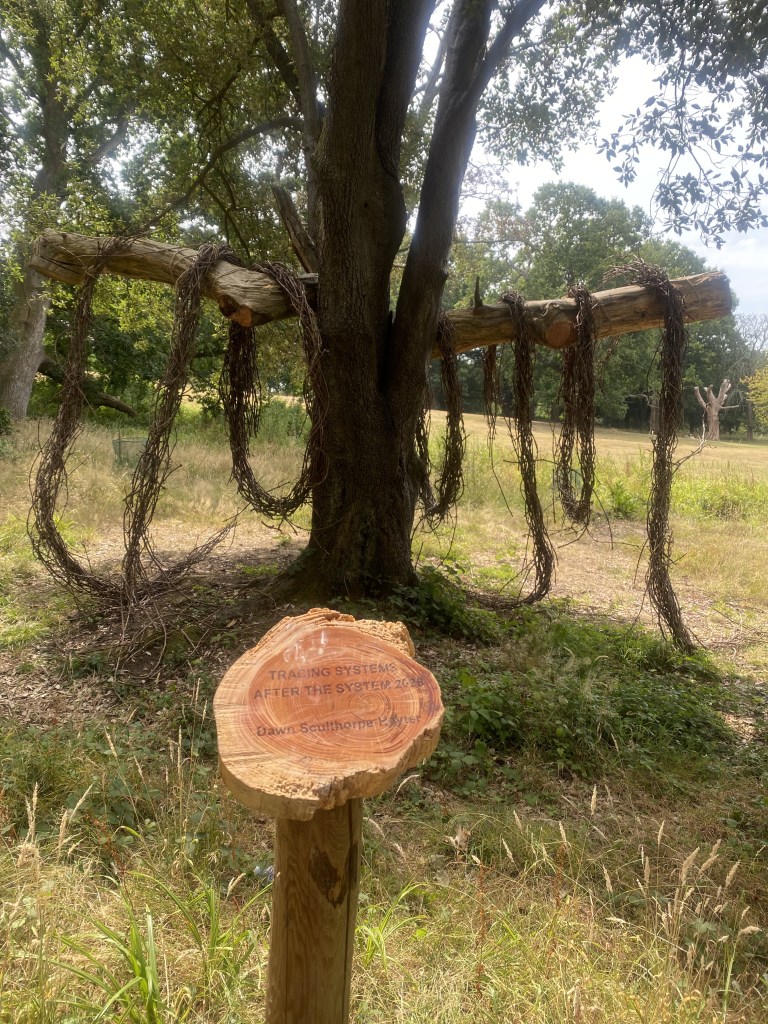

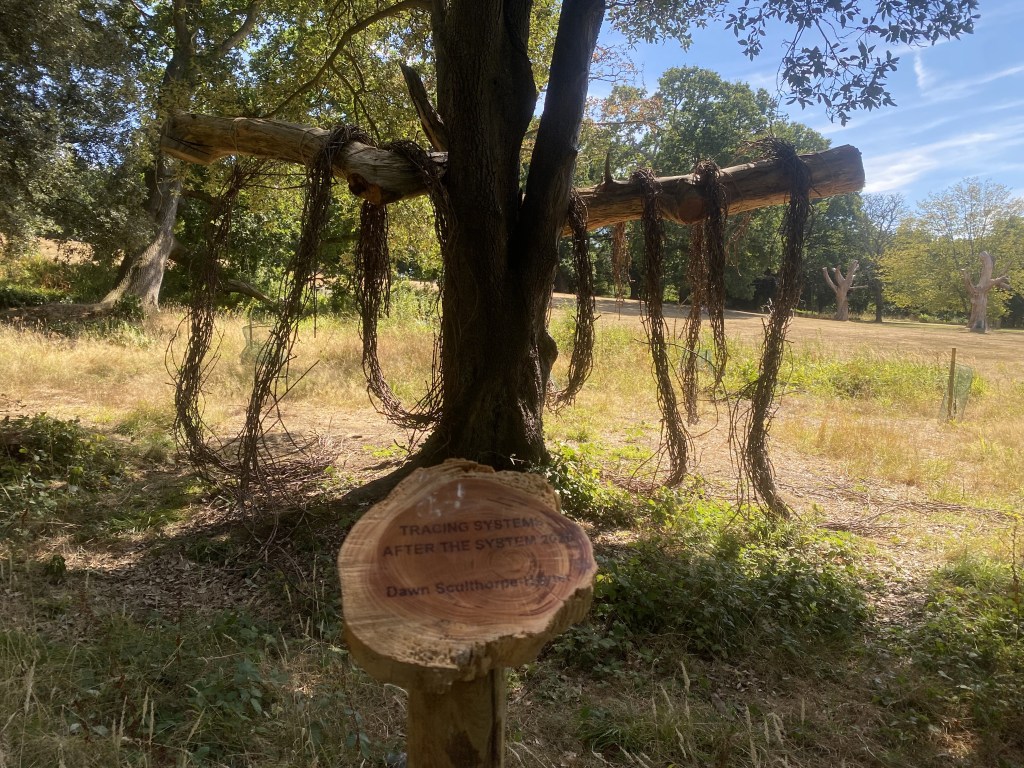
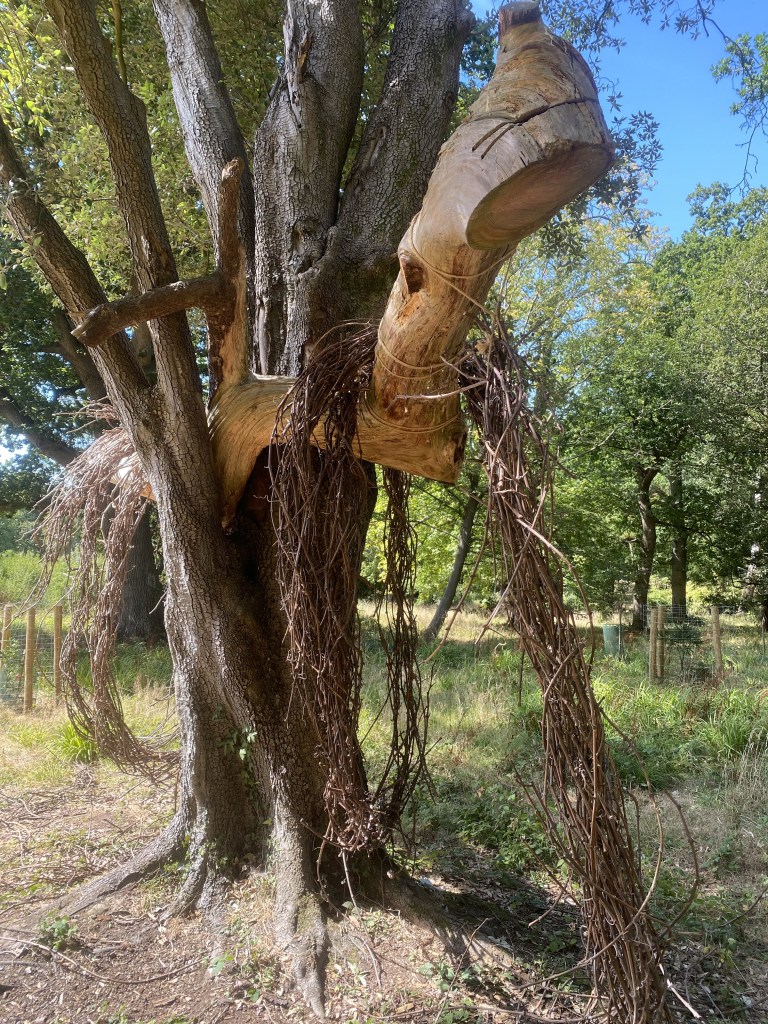
As August entered a very hot summer the remaining 3 Torus were still a favourite for swinging on. All Torus had clearly unravelled, not just opening up the ring but also loosing material to thin the Torus. Over the first weekend of August a festival at Staunton saw hundreds of visitors to the Public Sculpture. The rhythm remains in the spacing and the vertical 7 lines against the horizontal beam can still be appreciated, while those opened Torus retain connection to the beam and to the ground.
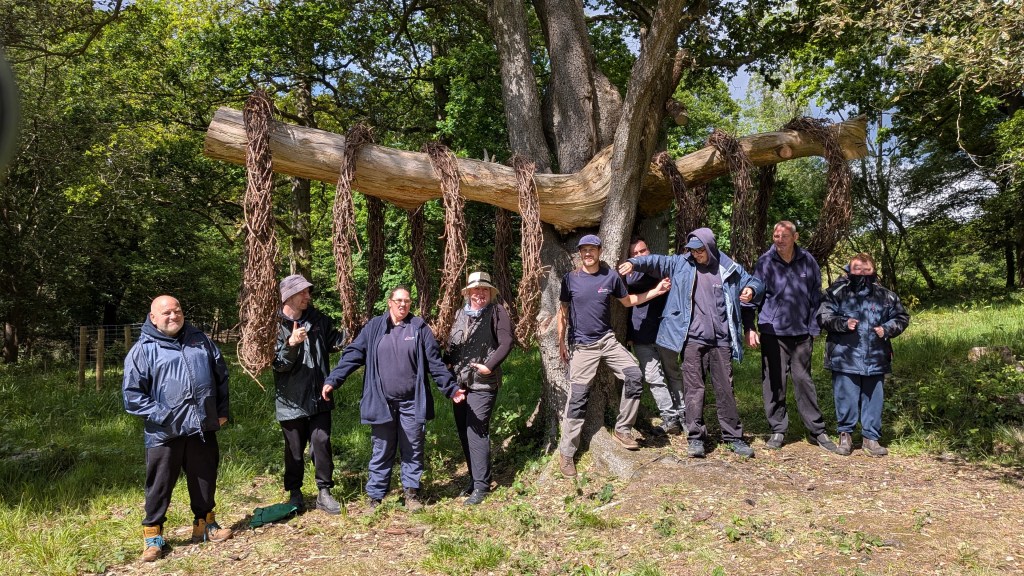
Follow the Tracing Systems journey on Instagram or Facebook @SculthorpeStudios.
Stay tuned the Red Gloves have more projects to share with you at Staunton Country Park
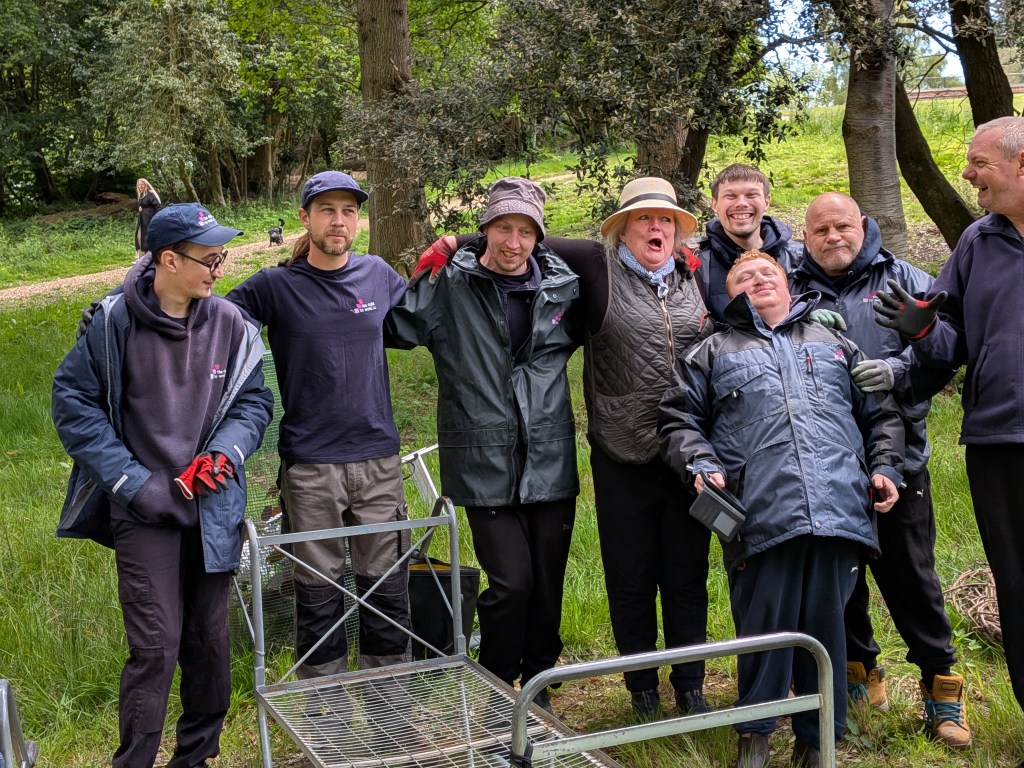
Tracing Systems the Film by SculthorpeStudios…
Tracing Systems the film…….documents the life of an installation from conception and construction through public interaction, transformation and eventual unravelling. More than a record of an artwork, it reflects the evolution of my practice towards participatory inquiry into complex systems.
 SculthorpeStudios